A Practical Guide from an Operator

💻 No hype. No price calls. Just honest analysis from an operator mining since 2019. Subscribe for free to get new insights in your inbox, or explore the mining hardware operators are deploying today.
🟠 Introduction
Bitcoin mining is the process of converting electricity into bitcoin. That’s it. You run specialized hardware that performs trillions of calculations per second, and in return, the Bitcoin network pays you for securing it. There’s no middleman, no application process, and no one’s permission required.
But mining is not passive income. It’s not free money. It’s an operation — one that requires understanding your hardware, your electricity costs, your network competition, and your margins. People who treat it like plugging in a money printer end up losing money. People who treat it like a business can do very well.
I’ve been mining Bitcoin since 2019. I’ve run machines at home and at scale. This guide is everything I wish someone had told me before I started — no hype, no inflated profit projections, just the practical reality of what it takes to start mining in 2026.
This guide covers everything from a ~$90 Bitaxe lottery miner to commercial-scale ASICs. If you’re willing to spend under $200 on a small learning setup like a Bitaxe and Tangem wallet, or $1,000+ on a more powerful home ASIC like the Avalon Mini 3 or Avalon Q, and you’re ready to think in months rather than days, keep reading. If you’re looking for passive income or a plug-and-play money printer, this isn’t it.
▶️ Choose your setup path below.
🟠 Decide What Kind of Miner You Are
Your mission. Before you buy anything, figure out what you’re actually trying to do. Mining means different things at different scales, and your goals determine your hardware, your budget, and your expectations.
▫️ A home miner is someone running machines from their house, garage, or basement. That could be a single starter unit to learn the basics, or it could be a small rack of low-watt solo miners taking lottery shots at a block reward. Some home miners run multiple machines without a massive electricity bill, knowing the odds of hitting a block are slim but accepting the asymmetric upside. The goal varies — learning how mining works, earning a small amount of bitcoin through pool payouts, participating directly in securing the network, or simply taking a calculated bet that a solo block hit changes everything. You might not break even depending on your electricity rate and approach. But you’ll understand Bitcoin at a level that people who just buy and hold never reach.
▫️ A hosted miner buys their own hardware but pays a facility to rack it, cool it, and keep it running. This makes sense if your home electricity is too expensive or your living situation can’t handle the heat. You give up some control and pay hosting fees, but you get access to cheaper power rates and professional infrastructure.
▫️ A commercial miner is running a handful to a dozen or more machines in a garage, workshop, or small dedicated space. You’re past the hobby stage — you’re pulling 240V circuits, managing heat output, and thinking about your operation in terms of margins rather than curiosity. This is the scale where most serious home miners end up once they’ve learned the basics and want more hashrate without going fully industrial.
▫️ An industrial miner is a different animal entirely. You’re running dozens or hundreds of machines in a dedicated facility, pulling three-phase power, negotiating commercial electricity contracts, managing cooling infrastructure at scale, and operating where small efficiency gains translate into significant revenue. This is warehouse-level mining with purpose-built electrical and ventilation systems.
Whether you’re commercial or industrial, one thing is the same: the tax advantages become significant the moment you structure your mining as a business. Registering a mining operation opens the door to writing off hardware purchases, electricity, infrastructure, and maintenance. In some cases, miners operate at an accounting loss while still accumulating bitcoin — using depreciation and expense deductions to reduce their tax burden while their BTC holdings grow. This applies whether you’re running six machines on 240V in your garage or sixty machines on three-phase in a facility. If you’re thinking about scaling beyond a small home setup, talk to an accountant who understands both small business tax law and digital assets. The structure you choose early can save you serious money down the road.
If you’re reading this guide, you’re probably a home miner. That’s where I started, and it’s the right place to learn. Start small, understand the fundamentals, and scale if and when it makes sense.
🟠 Choosing Your First Hardware
Bitcoin is mined using ASICs — Application-Specific Integrated Circuits. These are machines built to do one thing: perform SHA-256 hash calculations as fast and efficiently as possible. You cannot mine Bitcoin profitably with a regular computer or a GPU in 2026. The network hashrate is too high. You need an ASIC.
For a true beginner who wants to learn the basics with minimal risk, the Canaan Avalon Nano 3S is one of the simplest entry points. It runs at up to 6 TH/s on roughly 140W — quiet enough to sit in your living room, low enough power draw to plug into a standard outlet, and cheap enough that you’re not risking serious money while you learn how pool mining, configuration, and daily payouts actually work.
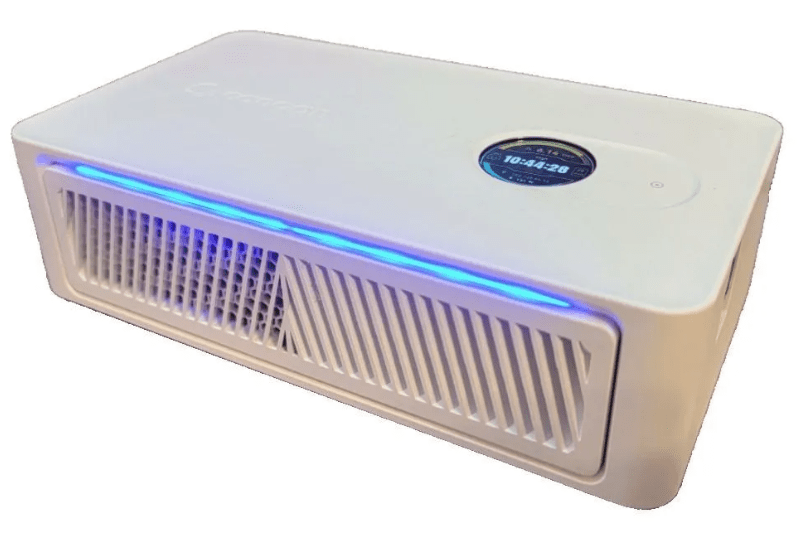
If you want real hashrate at home without industrial noise, the Canaan Avalon Q is the arguably the strongest home miner available in 2026. It pushes 90 TH/s at 18.6 J/TH with noise levels around 45 dB — comparable to a quiet refrigerator. It runs on standard 110V in eco and standard modes, and has three power settings so you can tune it to your electrical setup and comfort level. At 1,674W in super mode, it also doubles as a space heater — every watt an ASIC consumes converts to heat, so in cold climates you’re offsetting your heating bill while stacking sats. This is the machine for someone who’s serious about home mining but doesn’t want to rewire their house.

For the lottery-minded, the Bitaxe Gamma 601 is an open-source solo miner that runs at 1.2 TH/s on just 15–17W. It connects over WiFi, costs roughly $2–4 per month in electricity, and takes a shot at the full 3.125 BTC block reward every ten minutes. The odds of hitting a block are roughly 1-in-5.5-million per day — extremely low, but not zero. Bitaxe devices have confirmed multiple solo block finds, with individual payouts exceeding $250,000. Think of it as a perpetual lottery ticket. Some people run a rack of them for fun and accept the odds. That’s a legitimate way to participate in the network as long as you go in with eyes open about the math. It won’t replace income. It might surprise you once.
When you’re ready to move beyond home mining, machines like the Bitmain Antminer S21 XP at 270 TH/s and 13.5 J/TH represent the commercial tier — serious hashrate, strong efficiency, but also serious power draw and heat output.
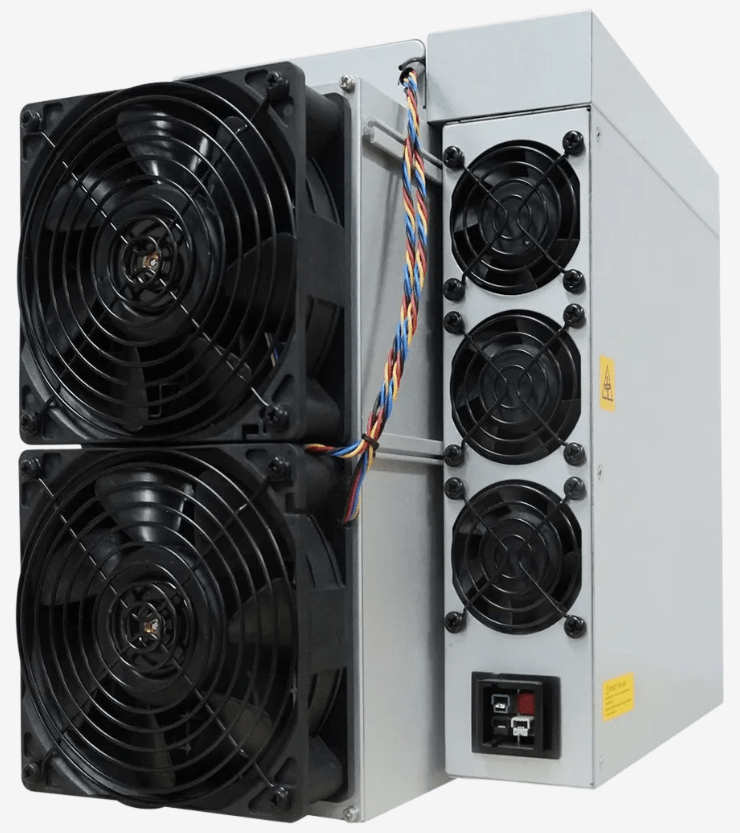
These are not bedroom machines. If you want to understand the current generation of commercial hardware in detail, I wrote a full breakdown in The New ASIC Landscape: What Industrial Miners Are Actually Buying in 2026.
What to avoid: used Antminer S9s on eBay for $50. Yes they’re cheap. They’re also a decade old, wildly inefficient at roughly 98 J/TH, and they will cost you more in electricity than you’ll ever earn in bitcoin unless your power is nearly free. The only legitimate use for an S9 in 2026 is as a space heater that happens to mine a tiny amount of bitcoin on the side.
▶️ I recommend Altair Technology, ASIC Marketplace, and OneMiners as reputable hardware vendors. These are affiliate links — I may earn a commission at no extra cost to you. In some cases, you may also receive a small discount through these links, though offers may change over time.
▶️ Need a hardware wallet? The Tangem wallet is a simple, card-format option for self-custody. Use code GPEBZY for 10% off.
🟠 Power and Electrical Basics
Before you plug anything in, you need to understand what your home electrical panel can handle. This is the part most beginners skip, and it’s the part that can cost you the most if you get it wrong.
Every miner draws a specific amount of power measured in watts. Your home circuits are rated in amps at a specific voltage. The relationship is simple: watts divided by volts equals amps. A Bitaxe at 17W on a 110V outlet draws almost nothing — you’ll never notice it. An Avalon Q in super mode at 1,674W on 110V draws about 15.2 amps. That can trip a standard 15A breaker. You need to know these numbers before you plug in.
The 80% rule matters here. Electrical codes say you should only load a circuit to 80% of its rated capacity for continuous use. A 15A breaker means 12A continuous. A 20A breaker means 16A continuous. Mining is a 24/7 continuous load — this isn’t like running a microwave for three minutes.
For a Nano 3 or a few units, your existing outlets are fine. For an Avalon Q, you’ll want a dedicated circuit — meaning nothing else on that breaker. In eco or standard mode on 110V, a dedicated 15A circuit handles it. Super mode on 110V needs a 20A circuit with the correct outlet type. If you want to eliminate any concern, running 240V cuts your amperage draw roughly in half for the same wattage, which gives you more headroom and is generally more efficient.
If any of this is unclear, hire an electrician before you plug in a commercial-grade miner. A $200 electrician visit is cheaper than a house fire. I’m not being dramatic — overloaded circuits and improper wiring are real risks when you’re running high-draw equipment 24 hours a day.
When you start thinking about running multiple commercial machines, you’re entering three-phase power territory. I wrote a full guide on that transition in When Single Phase Isn’t Enough: A Miner’s Guide to Three Phase Power.
Recommended options to consider:
▶️ Note — you should never plug a larger mining ASIC directly into a wall outlet without surge protection. A power surge can fry your hardware instantly. Use a quality surge protector rated for the wattage your miner draws — look for at least 2,000–3,000 joules of protection, which handles most household surges. For miners running higher-draw machines or in areas with unstable power, a UPS (uninterruptible power supply) adds battery backup on top of surge protection. A $30 surge protector is cheap insurance on a $1,000+ machine.
▶️ Additionally — many ASIC miners connect via ethernet, and most don’t include a cable in the box. Smaller home miners like the Avalon Nano 3S and Bitaxe connect wirelessly. The Avalon Q ships with a WiFi module, but many users report WiFi drops during mining — ethernet gives you a more stable, reliable connection to your router, which matters when your miner needs to maintain a constant 24/7 connection to your pool. If you’re running anything commercial, ethernet isn’t optional — it’s required. A Cat6 ethernet cable is cheap insurance for uptime. Grab one before your hardware arrives so you’re not waiting on a cable to start mining.
▶️ One last optional but popular tool — a plug-in power meter. It sits between your miner and the wall outlet and shows you exactly how many watts your machine is drawing in real time. Manufacturers list rated wattage, but actual draw varies depending on your voltage, ambient temperature, and firmware settings. Serious miners want to know their real numbers, not spec sheet estimates. It’s the easiest way to calculate your actual electricity cost per day and know exactly where your margins stand. Completely optional, but once you plug one in, you’ll never want to run without it.
🟠 Picking a Mining Pool vs Solo Mining
When you mine Bitcoin, your machine is searching for a valid block hash. The odds of any single miner finding one depend on how much hashrate you control relative to the entire network. As of early 2026, the Bitcoin network is running above 900 EH/s. Your Avalon Q at 90 TH/s represents roughly 0.00001% of that. The odds of you finding a block solo are astronomically low.
A mining pool solves this by combining hashrate from thousands of miners. When the pool finds a block, the 3.125 BTC reward gets split among all contributors proportional to the hashrate each one provided. You earn small, consistent payouts instead of waiting for a lightning strike that may never come.
There are different payout structures and they matter. PPS (Pay Per Share) pays you a fixed amount for every valid share you submit regardless of whether the pool finds a block — the pool absorbs the variance risk. FPPS (Full Pay Per Share) works the same way but includes a share of estimated transaction fees on top of the block subsidy. PPLNS (Pay Per Last N Shares) only pays when the pool finds a block, but your share is based on how many shares you contributed in the window before the block was found. PPLNS can pay more over time but your daily income will be less consistent.
For beginners, a few reputable pools to look at: Braiins Pool (formerly Slush Pool — the oldest Bitcoin mining pool), Ocean (focused on transparency and decentralization), and F2Pool (one of the largest global pools). Each has slightly different fees, payout methods, and minimum payout thresholds. Start with one, learn how it works, and switch later if you want to compare. A complete list of bitcoin mining pools may be found at miningpoolstats.stream/bitcoin.
Setting up is straightforward. You create an account on the pool’s website, get a worker address, enter it into your miner’s configuration page along with the pool’s stratum URL and port number, and your miner starts submitting shares. Most pools have dashboards where you can monitor your hashrate, earnings, and payouts in real time.
Now — solo mining. If you’re running a Bitaxe or a stack of low-watt lottery miners, solo mining is the whole point. You’re not joining a pool to earn fractions of a cent per day. You’re pointing your miner at a solo mining pool like AtlasPool, CK Solo Pool, or Kano Solo Pool, and every valid hash you submit is your own shot at the full 3.125 BTC block reward. The odds are tiny. A single Bitaxe Gamma at 1.2 TH/s has roughly a ~1-in-5.5-million chance per day of finding a block. But it costs $2–4 per month in electricity, and multiple Bitaxe devices have confirmed solo block finds worth over $250,000 each.

You can also point your SHA-256 hardware at other SHA-256 coins where the network difficulty is significantly lower than Bitcoin’s. Bitcoin Cash, DigiByte, and other SHA-256 chains have a fraction of Bitcoin’s hashrate competing for blocks. This means your small miner has better odds of earning more frequent — though smaller — rewards.
The choice between pool mining and solo mining isn’t right or wrong. It’s a question of what you want out of mining.
▫️ Consistent small payouts and predictable income? Pool.
▫️ A long-shot bet with asymmetric upside? Solo.
Some people run both — an Avalon Q on a pool for steady sats and a few Bitaxes on solo for the lottery. That’s a perfectly reasonable setup.
🟠 Setting Up a Wallet
Do not leave your bitcoin on a mining pool. Pools are not banks. They can get hacked, shut down, or freeze withdrawals. The entire point of mining bitcoin is self-sovereignty — you’re producing your own money without permission from anyone. Leaving it on someone else’s platform defeats the purpose.
You need a wallet, and you need to understand the difference between a hot wallet and a cold wallet.
▫️ A hot wallet is software on your phone or computer — always connected to the internet, convenient for small amounts and quick transactions. Good for receiving daily mining payouts. Not ideal for storing anything you’d be upset to lose.
▫️ A cold wallet is a hardware device that stores your private keys offline. Your bitcoin can only be moved when you physically connect the device and approve the transaction. This is where serious savings go.
For beginners, I recommend starting with a hardware wallet from day one. Get in the habit of self-custody early. The Tangem wallet is a solid entry point — it’s a card-format hardware wallet that’s simple to set up and use. Use the code GPEBZY for 10% off your purchase.

Set your mining pool to automatically pay out to your wallet address once you hit the minimum threshold. This way, your bitcoin moves from the pool to your custody regularly without you having to manually withdraw every time.
Write down your recovery phrase. Store it somewhere safe, offline, and separate from the wallet itself. If you lose your recovery phrase and your wallet breaks, your bitcoin is gone. This is not a figure of speech. There is no customer support number to call. No one can recover it for you. Treat your recovery phrase like what it is — the keys to your money.
🟠 Realistic Profitability
This is where most beginners get burned. They plug their miner’s hashrate into an online profitability calculator, see a number that looks good, and assume that’s what they’ll earn. It’s not. Profitability calculators show you a snapshot based on today’s difficulty, today’s bitcoin price, and today’s fees. All three of those change constantly.
The variables that actually determine whether you make money mining:
▫️ Your electricity cost. This is the single biggest factor. A miner paying $0.04/kWh has completely different economics than someone paying $0.12/kWh. In many cases, the difference between profitable and unprofitable mining is literally just your power bill. Know your rate. If you don’t know it, check your electricity bill before you buy a miner.
▫️ Network difficulty. As more miners join the network, difficulty goes up, and your share of the total reward goes down. Difficulty adjusts roughly every two weeks. When bitcoin price rises, new miners pile in, difficulty climbs, and your margins shrink even though the price is higher. I wrote a full explanation of this mechanism in How Bitcoin Mining Difficulty Actually Works.
▫️ Bitcoin price. Higher price means your mined bitcoin is worth more in dollar terms. But price also attracts competition, which pushes difficulty up. These two forces are constantly pushing against each other.
▫️ Hardware efficiency. Measured in joules per terahash (J/TH). Lower is better. A machine running at 18.6 J/TH extracts far more bitcoin per watt of electricity than one running at 98 J/TH. This is why old hardware becomes unprofitable — the network moves on and your machine can’t keep up.
🔎 What It Actually Costs — A Quick Snapshot (April 2026)
Here’s what small-scale Bitcoin mining actually looks like under current network conditions. These are not best-case numbers:
🔸 Bitaxe Gamma 601 (1.2 TH/s, 17W) — costs ~$2–4/month in electricity. Earns essentially nothing through pool mining at this hashrate. The play is solo mining: a ~1-in-5.5-million daily shot at 3.125 BTC (statistically many years between wins, not days). Pure lottery.
🔸 Avalon Nano 3S (6 TH/s, 140W) — costs ~$10–15/month at $0.10/kWh. Earns fractions of a dollar per day through pool mining. This is a learning tool, not a profit machine. You’re paying tuition to understand how mining works — not to make big money.
🔸 Avalon Q (90 TH/s, 1,674W in super mode) — costs ~$120–130/month at $0.10/kWh. At current difficulty and ~$66,000 BTC, expect roughly $80–90/month in mining revenue through a pool. At $0.10/kWh you’re slightly underwater. At $0.065/kWh you’re in the green. This is where your electricity rate makes or breaks the operation.
🔸 Antminer S21 XP (270 TH/s, 3,645W) — costs ~$260–270/month at $0.10/kWh. Earns roughly $250–275/month at current conditions. Profitable only at or below ~$0.09/kWh for most operators. This is commercial-tier hardware that demands cheap power.
For the full all-in cost breakdown including hardware amortization, hosting, and cooling, read How Much Does It Cost to Mine 1 Bitcoin. The deeper dive into what actually eats your margins is in Dominant Variable Costs in Bitcoin Mining and the full economics framework is in Bitcoin Mining Economics 101.
🟠 Common Beginner Mistakes
Cloud mining contracts. Almost all of them are bad deals. The company takes your money upfront, mines with hardware they control, and pays you a return that almost always underperforms what you’d earn mining yourself — if they pay you at all. Many cloud mining platforms have turned out to be outright scams.
This is not the same as hosting, where you own your hardware and pay a facility to rack and run it. Cloud mining means you never own anything — you’re buying a promise of returns from a company running machines you’ll never see. I broke this down in detail in Bitcoin Cloud Mining vs Self-Hosting.
Buying outdated hardware without understanding the math. A cheap miner is not a good deal if it costs more in electricity than it earns in bitcoin — unless that’s not why you’re running it. Some people buy smaller machines like the Canaan Avalon Mini 3 specifically to heat their homes, offsetting what they’d spend on an electric space heater anyway.
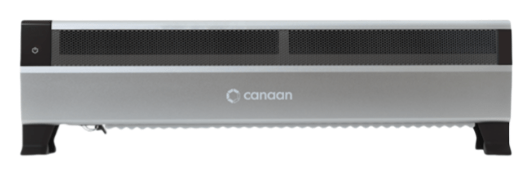
In that case, any Bitcoin earned is a bonus on top of heat you were already paying for. That’s a valid use case, especially in cold climates. But if you’re buying an ASIC expecting it to be profitable as a pure miner at normal electricity rates, always check the J/TH efficiency and calculate your daily power cost against expected earnings before you spend the money.
Ignoring electricity costs. “I’ll just run it and see what happens” is how people end up with a $200 electricity bill and $40 worth of bitcoin. Do the math first. Always.
Expecting instant returns. Mining is not a get-rich-quick scheme. ROI timelines on most hardware are measured in months to years, not days. If someone tells you otherwise, they’re selling something.
Not accounting for heat and noise. Traditional air-cooled commercial ASICs produce serious heat and noise. An air-cooled machine like the Bitmain Antminer S21 XP is not something you run in your bedroom. But the mining hardware landscape has changed dramatically. Hydro-cooled machines like the Antminer S23 Hyd run near-silent, and immersion-cooled setups eliminate fan noise entirely. Home-friendly machines like the Avalon Q operate at around 45 dB — comparable to a quiet refrigerator.
Mining in 2026 can be silent if you choose the right hardware. But heat is heat regardless of cooling method — every watt your miner consumes converts to thermal energy. Plan your placement before you buy, and in warmer months, think about ventilation. In colder months, that heat is working for you. I covered the full evolution of quiet mining in The Silence Revolution: How Bitcoin Mining Got Quiet.
Not tracking costs for tax purposes. If you ever want to scale up and claim hardware or electricity as business expenses, you need records from the start. Keep a spreadsheet from day one — what you paid for equipment, your monthly electricity costs, your mining output. Your future accountant will thank you.
🟠 Your First 24 Hours
You’ve read the guide. Here’s exactly what to do next.
1. Buy your first miner. If you want to learn pool mining, grab a Canaan Avalon Nano 3S. If you want to take lottery shots at a full block reward, grab a Bitaxe Gamma 601. If you’re ready for serious home hashrate, go straight to the Canaan Avalon Q. If you want to heat your home and mine at the same time, the Canaan Avalon Mini 3 replaces a baseboard heater with one that stacks sats.
2. Consider the basics. Your miner may not come with everything you need — though smaller miners like the Bitaxe and Avalon Nano 3S run on WiFi and low power, so this applies more to the Avalon Q and up. Pick up a surge protector rated 2,000–3,000 joules to protect your hardware from power spikes, and consider a Cat6 ethernet cable for a more stable, wired connection to your router. Not required but highly recommended. These are cheap and essential — don’t wait until your miner arrives to realize you’re missing them.
3. Set up your wallet. Get a Tangem hardware wallet (code GPEBZY for 10% off). Write down your recovery phrase and store it somewhere safe. This is where your bitcoin goes — not an exchange, not a pool, your wallet.
4. Pick your pool. For pool mining, create an account on Braiins Pool, Ocean, or F2Pool. For solo mining with a Bitaxe, point it at AtlasPool or CK Solo Pool. Get your worker credentials and stratum URL ready.
5. Plug in and configure. Connect your miner to power and your network. Open the miner’s configuration page in your browser, enter your pool’s stratum URL, port number, and your worker credentials. Set your wallet address as the payout destination.
6. Watch your first shares. Open your pool’s dashboard and confirm your miner is submitting shares. If you’re pool mining, you’ll see your hashrate reported and small payouts accumulating. If you’re solo mining, you’ll see shares submitted and your best difficulty — and you wait.
✅ That’s it. You’re mining. Everything else is optimization.

You’re not going to get rich mining Bitcoin from home — unless you’re lottery mining and actually hit a block, which is possible but statistically unlikely. Most home miners earn modest returns in dollar terms. But every sat you mine is Bitcoin you didn’t have to buy at market price. If bitcoin is worth significantly more in 5–10 years, those modest daily payouts look very different in hindsight.
Mining also teaches you something that buying Bitcoin never does — how the network actually works, what secures it, and why proof of work matters.
If you’re here because someone told you mining is easy money, now you know the truth. If you’re still here because you want to learn, participate, and build something, you’re the kind of person this site is for.
Explore the full Library for deeper dives on every topic covered here. And if you want operator-level analysis in your inbox every week — subscribe free.
▶️ Looking to upgrade your operation? Altair Technology, ASIC Marketplace, and OneMiners carry the hardware serious miners are actually running.
▶️ Need a hardware wallet? The Tangem wallet is a simple, card-format option for self-custody. Use code GPEBZY for 10% off.
✅ Subscribe for Weekly Bitcoin Mining Insights
I publish weekly operator breakdowns on mining economics, fee markets, and Bitcoin fundamentals. No hype, no price calls — just hands-on analysis from an operator mining since 2019. Subscribe now to receive access straight to your inbox.
✅ Follow along on my socials:
⚫ X: @OrngeHorizonBTC
🔵 Bluesky: @orngehorizonbtc.bsky.social
🌐 Website: orangehorizonbtc.com
Originally published at https://orangehorizonbtc.com on March 21, 2026.
How to Start Mining Bitcoin was originally published in Coinmonks on Medium, where people are continuing the conversation by highlighting and responding to this story.