How to Pay for Stickers, Themes, and Digital Purchases in Messaging Apps Using a Single Cryptomus Crypto Card
 Cryptomus4 min read·Just now
--
Messaging apps aren’t limited to text messages but have grown into digital ecosystems. Being simple chat platforms earlier, now include their own stores, offer subscriptions, and have in-app payment flows.
This is especially noticeable if using more than one messaging app: you may buy stickers in one app, a premium subscription in another, and gifts in a third. Whether you use Discord or Snapchat, each purchase is small and quick, but together they create a broader payment problem. Despite apps’ interfaces, the storefronts, and the billing systems being different, the user needs a way to pay for digital extras without complexities.
That is where a crypto card can be useful — it gives users one method for working across these purchases and helps make digital spending simpler.
What Do Messaging Apps Offer?
In general, messaging apps have the same groups of digital features to offer:
- stickers, emoji, and personalization themes;
- premium subscriptions unlocking extra features;
- gifts, boosts, and add-ons for social activity;
- credits or extra communication tools (such as calls).
The exact format depends on the platform. For example, on LINE, there are often in-demand sticker packs, emojis, and themes. On Discord, users think of Nitro, Server Boosts, gifting, and Shop items (Avatar Decorations or Profile Effects). On Snapchat, the most popular paid feature is Snapchat+, adding premium and experimental tools. On Viber, purchases include stickers, Viber Plus, or Viber Out plans and credits. As for Telegram, it adds its own variation through Premium gifting, boosts, Stars, gifts, and digital purchases inside its ecosystem.
Why Paying Can Be Inconvenient?
The main problem is fragmentation. A person who uses several messaging apps is dealing with different payment environments at once, which creates extra steps. This becomes noticeable as these purchases are small and frequent. A failed renewal or the need to re-enter payment details feels annoying when the purchase itself is just a sticker pack or a monthly add-on.
There’s also the limitations issue. The app may not be compatible with some banks, or it may have operational specifics in certain regions. In these cases, users won’t be able to pay via a standard bank transfer or with a bank card.
Some find a budgeting issue as well. Since expenses are spread across different apps, this becomes harder to track as one spending category. Earlier it felt like a little charge, but now turned out to be a part of regular digital spending.
What These Purchases Have in Common?
Stickers, boosts, subscriptions, credits, and gifts may have different names and goals but are all digital purchases tied to one personal account.
Here’s what else they have in common:
- these are regular purchases that users make every week, month, or year;
- these are small buys without the complex checkout process as with large digital purchases;
- most often, there are several such purchases (e.g., stickers + gifts), or they are made across multiple messaging apps, so the process must be quick;
- these purchases are quite inexpensive, as they are usually small, supplementary items.
Given the many similarities, it would be practical to use a single purchasing approach that works for everyone: the payment method should be simple and consistent.
How a Crypto Card Helps?
A crypto card turns crypto into an everyday payment tool. When paying for messenger services with a crypto card, users benefit from the speed and convenience of the payment process.
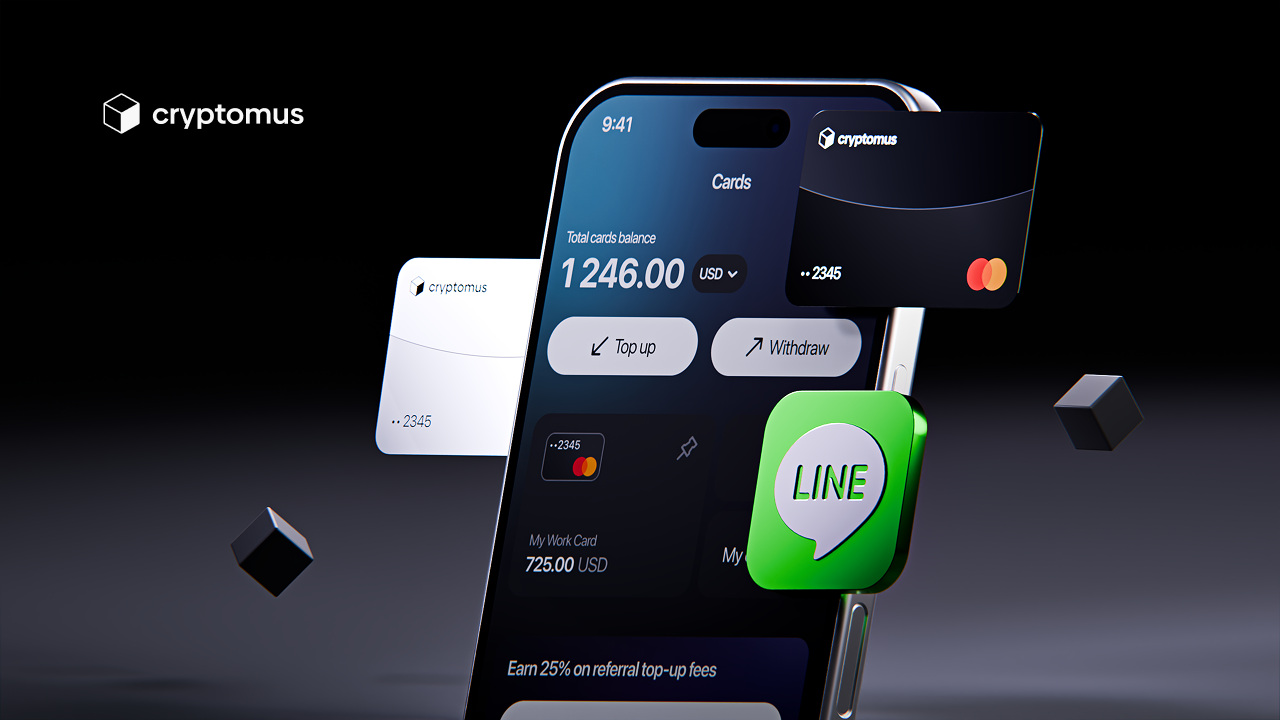
Cryptomus offers one such versatile virtual card. This is designed for everyday use: thanks to the app’s simple interface, users can manage the card directly and track the balance in real time. Features like 2FA, 3DS verification, instant notifications, and freeze or unfreeze controls make it feel safe and closer to a standard payment product.
Using Cryptomus as an example, the flow of issuing the card looks like this:
- sign up on the provider’s app;
- complete KYC once;
- issue a virtual card (on Cryptomus, there are up to 10 cards for different purposes available);
- top up the card from the Personal Wallet using USDT or USDC;
- connect it to Apple Pay or Google Pay for contactless payments;
- use it for purchases wherever Visa or Mastercard is accepted.
All that’s left is to add your crypto card as a payment method in the apps you use and set up automatic payments, if needed.
In Which Scenarios This Is Particularly Convenient?
A single crypto card is found useful in the following cases:
- when a person uses several messaging apps in parallel and makes purchases in all of them;
- when a user buys digital extras regularly, which is particularly relevant for subscriptions;
- when a user makes frequent purchases, such as sticker packs or gifts;
- when a user wants to separate digital spending from their main bank card for clearer budgeting;
- when a person often uses international digital services and wants one payment method available for all of them.
One Simple Method for Many Small Purchases
Messaging apps now sell far more than chatting. They offer personalization, premium features, and subscriptions, supplementing communication through stickers, gifts, and boosts. Though each platform presents these purchases differently, the features all belong to the same spending category.
This is where using a single crypto card comes into play, making practical sense. It simplifies the payment of small digital purchases, giving users one reusable method across several platforms. If you choose the Cryptomus card, the mechanism will be easy to handle: issue the card, top it up, and use it for the extras you prefer. The process takes just a few minutes, and the algorithm is simple enough that even someone with no background in crypto can handle it with ease. The value is in making purchases feel simple.