How Mastercard Crypto Is Making Web3 Easier to Use Without Wallet Addresses
 Ancilar | Blockchain Services6 min read·Just now
--
One of the biggest challenges in Web3 is not innovation or lack of infrastructure. It is the experience of actually using it.
For most people, the first interaction with crypto is not exciting. It is stressful.
You are asked to copy a long wallet address, select the correct network, double check every character, and then confirm a transaction that cannot be reversed. There is no safety net. No undo button. No second chance if something goes wrong.
Even people who have been in crypto for a while still feel that moment of hesitation before clicking send.
This is where many potential users drop off.
Not because they do not believe in Web3, but because the experience feels fragile and unforgiving.
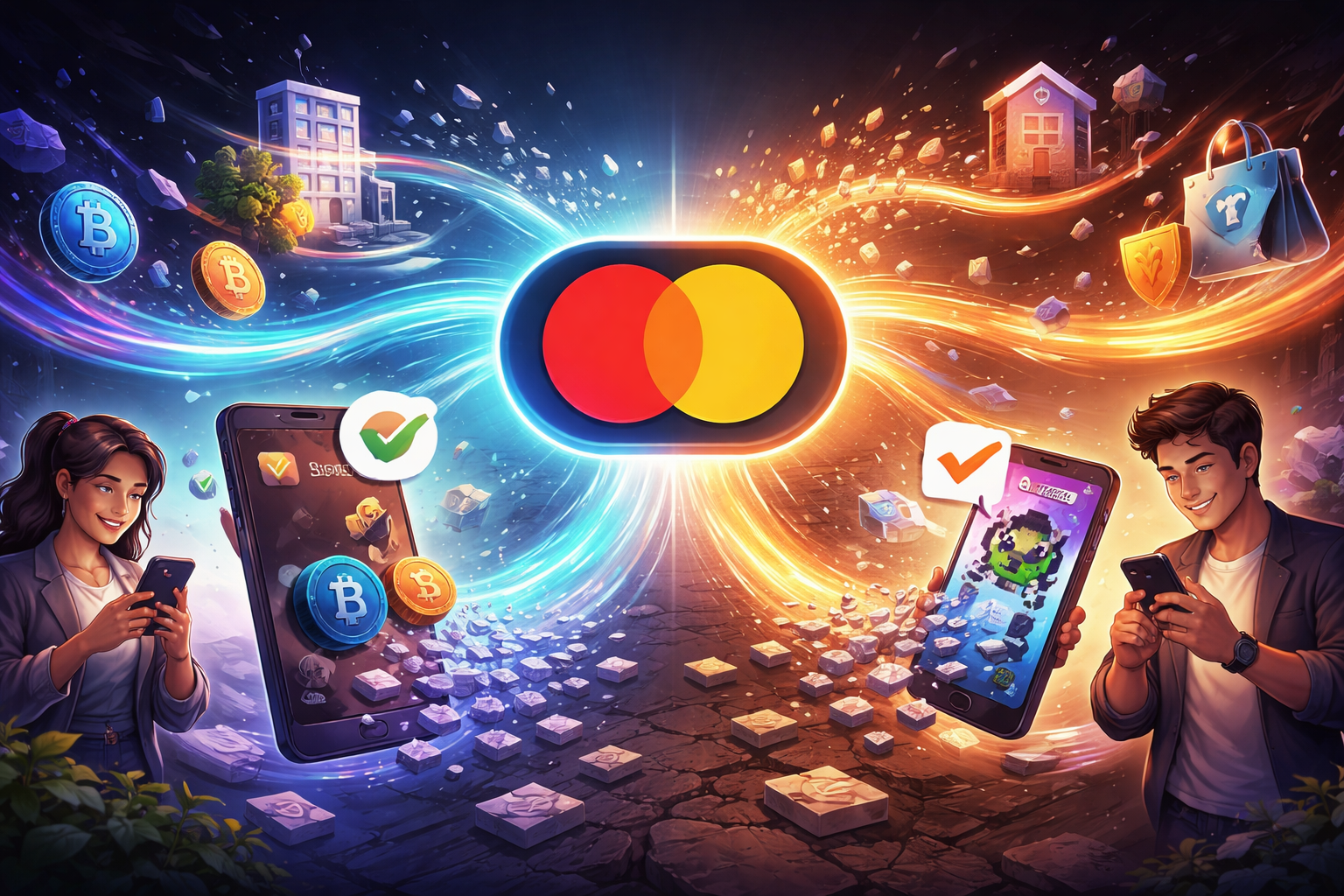
Mastercard’s Crypto Credential system is trying to fix exactly this layer. Instead of asking users to interact with complex wallet addresses, it introduces a simpler way to send and receive crypto using aliases that feel familiar, almost like usernames or email IDs.
It is a small shift on the surface, but it addresses one of the deepest usability issues in Web3.
The Problem With Wallet Addresses
At the core of every crypto transaction today is a wallet address. These addresses are long, random, and not designed for human readability.
A typical transaction looks something like a string of characters that carries no meaning to the user.
This creates several friction points:
- Wallet addresses are difficult to read and almost impossible to memorize
- Users often rely on copy paste, which introduces room for small but costly errors
- There is no clear identity attached, so you cannot easily confirm who the recipient is
- Systems do not warn you if you are using the wrong network or sending the wrong asset
- Users end up manually verifying the same address multiple times before sending
Even for experienced users, this process is not comfortable. It feels like handling something delicate where one mistake can have serious consequences.
For new users, this becomes a major psychological barrier. It introduces fear early in the experience, which is not a good foundation for adoption.
What Mastercard Crypto Credential Changes
Mastercard’s approach is to remove this friction without changing the underlying blockchain.
Instead of interacting with raw wallet addresses, users can send funds using simple aliases.
So instead of typing or pasting a long string, the experience becomes something like sending to:
john_doe@crypto
What makes this interesting is what happens behind the scenes. The simplicity on the surface is supported by a more structured system underneath.
When a user enters an alias:
- The system resolves that alias to a specific wallet address
- The identity associated with that alias is verified
- The transaction is checked for compatibility before execution
- The correct network and supported assets are confirmed
All of this happens before the transaction is finalized.
So instead of relying entirely on the user to get everything right, the system takes on part of that responsibility.
That shift alone can significantly reduce both mistakes and anxiety.
Why This Matters for Adoption
At a glance, this might look like a simple interface improvement. In reality, it solves multiple deeper issues at once.
First, it improves usability.
Users no longer need to understand wallet formats or worry about copying long strings correctly. The interaction becomes more intuitive and closer to what they are already used to in other digital products.
Second, it improves trust.
When transactions include identity verification and validation checks, users feel more confident about what they are doing. This is especially important for people who are new to crypto or for institutions that require a higher level of assurance.
Third, it reduces errors.
Before a transaction is executed, the system can check:
- whether the wallet supports the token being sent
- whether the correct blockchain is being used
- whether the recipient details are valid
This prevents one of the most frustrating aspects of crypto, which is irreversible mistakes.
Together, these improvements remove a lot of the friction that has quietly slowed down Web3 adoption.
How It Works Behind the Scenes
From a technical perspective, this introduces a new layer between the user and the blockchain.
The process typically follows a sequence.
A user registers an alias and completes identity verification. That alias is then linked to a wallet address. When someone initiates a transaction using that alias, the system resolves it, validates the details, and then executes the transaction on chain.
This can be understood as a flow:
- user inputs alias
- system resolves alias to wallet
- validation layer checks transaction details
- transaction is executed on blockchain
This middle layer is where most of the intelligence sits.
It handles clarity, safety, and compatibility, while the blockchain continues to handle execution and settlement.
This separation is important because it allows user experience to improve without modifying the core infrastructure.
Security Considerations
Simplifying the user experience does not eliminate risk. It changes the nature of the risks.
For example, alias based systems introduce new attack surfaces that need to be carefully managed.
Some of the key concerns include:
- attackers attempting to create similar looking aliases to impersonate real users
- incorrect or compromised mapping between an alias and its wallet address
- reliance on off chain systems that may introduce centralization risks
- balancing identity verification with user privacy expectations
Each of these areas requires strong design decisions.
Verification systems need to be reliable. Mapping layers need to be secure. Users need clear signals to know they are interacting with the correct identity.
If not handled properly, the same system designed to reduce risk could introduce new forms of it.
What This Means for Builders
There is a broader lesson here that goes beyond Mastercard.
Web3 is gradually shifting from being protocol driven to being experience driven.
In the early days, most of the focus was on building infrastructure. Now, the focus is moving toward making that infrastructure usable.
If your product requires users to understand too many technical details, or if it creates hesitation at key steps, adoption will suffer.
The projects that stand out will focus on things like:
- simplifying how users interact with the system
- reducing the amount of thinking required at each step
- building trust directly into the product experience
This does not mean removing complexity entirely. It means hiding it where it does not need to be visible.
A More Practical Way to Think About Product Design
Instead of exposing raw blockchain mechanics to users, it is often better to guide them through a structured experience.
This can include:
- abstraction layers that handle complexity in the background
- flows that guide users step by step
- validation systems that prevent mistakes before they happen
A useful way to think about it is this.
How can the experience feel as simple as a familiar Web2 product, while still being powered by Web3 underneath
That balance is where a lot of meaningful innovation is happening right now.
Conclusion
What Mastercard is building is not just a feature update. It reflects a larger shift in how Web3 products are evolving.
The move from wallet addresses to simple aliases might seem like a small detail, but it directly addresses one of the biggest usability challenges in crypto.
And usability is what drives adoption.
In the long run, the projects that succeed will not necessarily be the most technically complex ones. They will be the ones that people can use without hesitation.
How Ancilar Helps
At Ancilar, the focus is on building Web3 products that feel intuitive from the very first interaction.
This includes designing transaction flows that reduce confusion, building systems that prevent user errors, and making sure the frontend experience aligns with what is actually happening on chain.
Because in Web3, the main barrier is often not the technology itself.
It is how that technology is experienced by the user.
If you are serious about building for the long term, we are ready to help.
Email: [email protected]
Website: https://www.ancilar.com