Hidden Crypto Card Fees: The Cost Problem Most Users Only Notice Too Late
 BountyPortals Official Blog3 min read·Just now
--
Hidden crypto card fees are a persistent issue in the crypto payment space. Many users enter the ecosystem expecting fast and seamless transactions, only to realize later that the actual cost of spending crypto is not always clear.
This gap between expectation and reality often leads to frustration. More importantly, it highlights a structural problem in how crypto card costs are presented.
The Core Problem: Unclear Cost Structures
At first glance, crypto cards appear simple. Users load funds and spend them like any traditional payment method. However, the complexity lies beneath the surface.
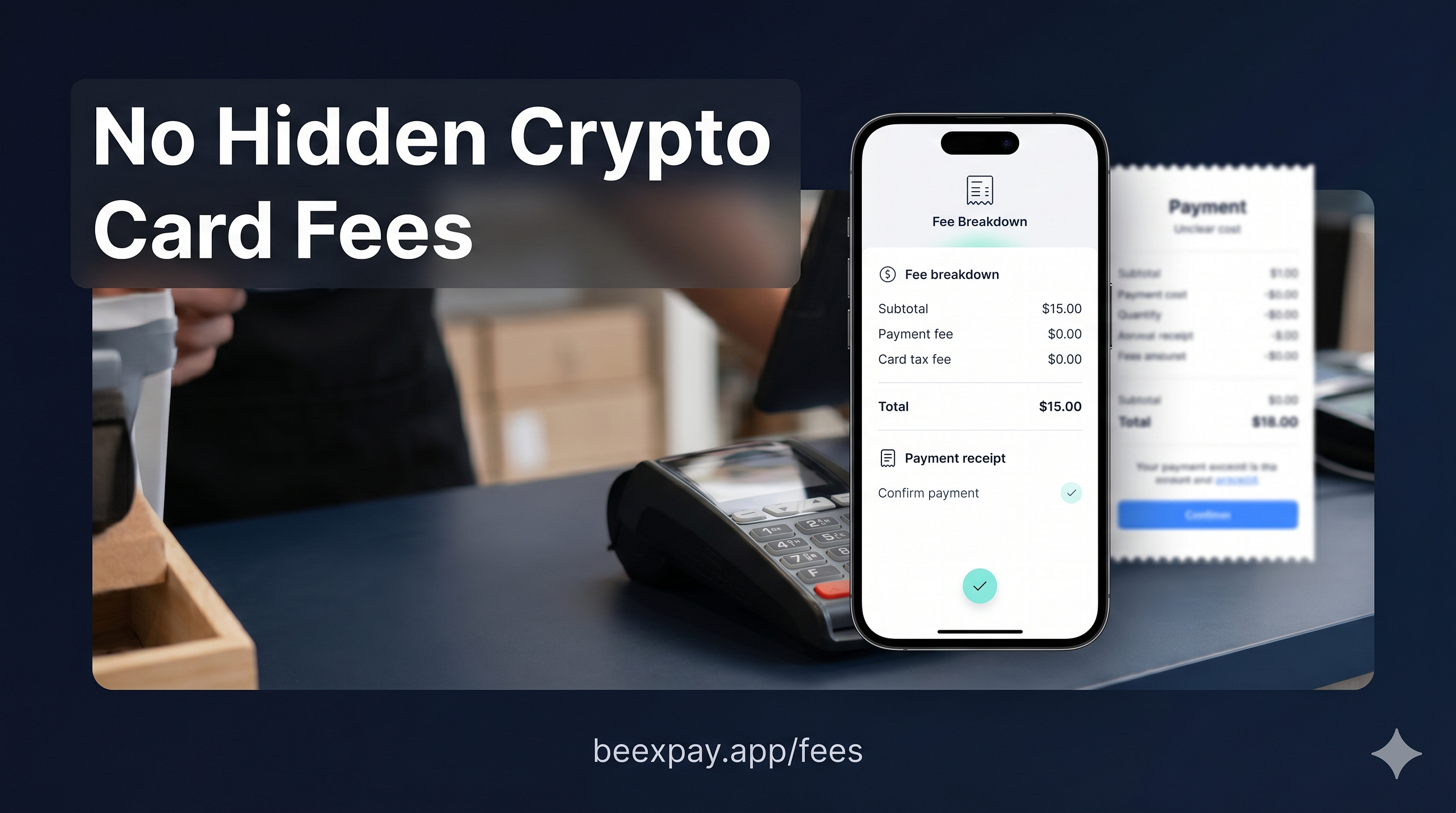
Hidden crypto card fees can appear in multiple stages of the transaction process. These include reload fees, conversion spreads, and currency-based transaction costs. When these elements are not clearly communicated, users struggle to understand the total cost.
Where Hidden Crypto Card Fees Occur
Understanding where costs arise is essential.
1. Reload Fees
Some platforms apply varying reload fees depending on verification level or payment method. Without clear communication, users may only notice this after multiple transactions.
2. Conversion Timing
Crypto is typically converted into fiat at the point of use. If this process is not transparent, users may experience unexpected variations in cost.
3. Currency-Based Charges
Payments in different currencies can introduce additional fees, often based on bank rates. Without clarity, this becomes another layer of uncertainty.
Why Transparency Changes the Experience
Transparent pricing shifts the experience from reactive to predictable. When users know exactly what to expect, they can plan their spending more effectively.
This is particularly important for users who rely on crypto cards for frequent transactions or travel-related expenses.
Practical Example
Consider a user paying for online services in USD. If transaction fees are unclear, each payment may differ slightly in cost. Over time, these differences accumulate and become noticeable.
With clear fee structures, the same user can anticipate costs before making a transaction, reducing uncertainty.
BeeXpay and Transparent Pricing
BeeXpay addresses this issue by providing a defined and structured pricing model.
- Reload fee: 4% without KYC (Light KYC), 2.5% with Full KYC
- USD transaction fees: $0.25 to $0.50
- Other currencies: 1.5% to 2% based on bank rate
Access is available through a Telegram Mini App for Light KYC and a mobile app for Full KYC. Users can choose between virtual and physical cards, with physical cards linked to the Full KYC flow and delivery estimated at around 2 weeks.
Crypto is converted to fiat at the moment of use, with messaging around about 5-second conversion. This ensures that users understand the transaction at the point it happens.
Building Fintech Trust Through Clarity
Fintech trust is built through consistency and transparency. When users can clearly see how costs are structured, confidence increases.
This is especially relevant in crypto, where volatility and technical complexity already introduce uncertainty.
A Question for the Community
Would clearer pricing encourage more frequent use of crypto cards for everyday payments?
Conclusion
Hidden crypto card fees remain a key friction point in the user experience. Platforms that prioritize transparent pricing offer a more reliable and predictable alternative.
BeeXpay provides a model where costs are clearly defined, helping users make informed decisions.
CTA: Use a pricing model that is easier to understand
https://beexpay.app