Global Witness claims Amazon, Sony sourced conflict-linked coltan from DRC
An investigation alleges major electronics brands likely purchased minerals from supply chains controlled by M23 rebels accused of widespread atrocities.
Share
Add us on Google by Editorial Team Jun. 10, 2026The minerals inside your smartphone might be funding war crimes. That’s the thrust of a new investigation from Global Witness, which alleges that Amazon, Ericsson, and Sony are among global brands that “likely” sourced coltan from supply chains controlled by the M23 rebel group in the Democratic Republic of Congo.
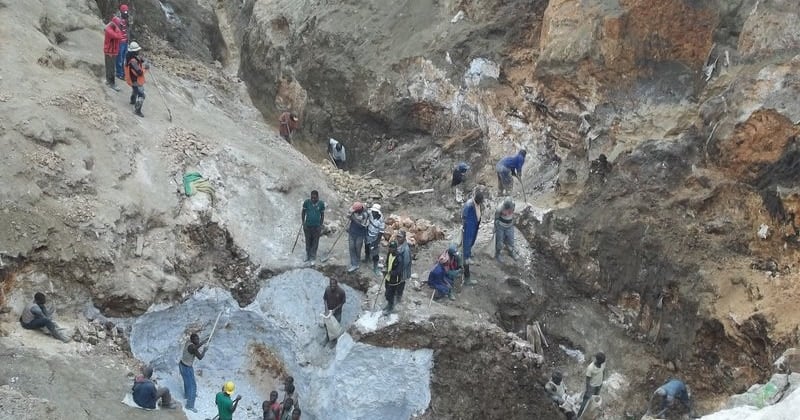
M23, a militia accused of summary executions, widespread sexual violence, and torture, has controlled the Rubaya mines in North Kivu since late April 2024. Those mines produce roughly 15% of the world’s coltan and tantalum supply, the stuff that makes capacitors in your phone work. A typical smartphone contains about 40 milligrams of tantalum.
Following the supply chain
In this case, the route allegedly runs through Rwanda. According to the investigation, Luxembourg-based trading firm Traxys purchased 280 tonnes of coltan from Rwanda in 2024. A substantial portion of that coltan was allegedly sourced from M23-controlled areas in the DRC.
The M23 group generates an estimated $800,000 per month from taxation and trade activities tied to the Rubaya mines. That’s nearly $10 million a year flowing to a group that has been under US sanctions since 2013.
AdvertisementAnd yet, no companies purchasing M23-linked coltan have faced sanctions. Traxys, the trader at the center of the allegations, has not been sanctioned either.
Why existing regulations haven’t worked
This isn’t the first time the world has tried to address conflict minerals from the DRC. The Dodd-Frank Act, passed in 2010, required US-listed companies to disclose whether their products contained conflict minerals from the region. The EU followed with its own conflict minerals regulation, which took full effect in 2021.
The human cost extends beyond the conflict itself. A catastrophic landslide at the Rubaya mines in February 2026 killed over 200 miners, with a history of prior deadly incidents under M23 control.
The blockchain promise, and its limits
Several pilot projects have attempted blockchain-based traceability for mineral supply chains. Companies like Minespider and RCS Global have explored distributed ledger solutions for mineral supply chain transparency.
In practice, the technology runs into a fundamental problem. Blockchain can verify that data entered into the system hasn’t been tampered with. It cannot verify that the data was accurate in the first place. If a smuggler in Goma declares that a shipment of coltan originated in Rwanda rather than an M23-controlled mine, the blockchain faithfully records that lie forever.
Combined with physical verification methods like geochemical fingerprinting, which can identify a mineral’s geographic origin through its chemical signature, distributed ledger technology could meaningfully improve traceability. But no one has deployed such a combined system at scale in the DRC’s artisanal mining sector.
What this means for investors
For companies named in the Global Witness investigation, the immediate risk is reputational. Amazon, Sony, and Ericsson all have corporate responsibility programs and public commitments to ethical sourcing.
The longer-term risk is regulatory. The EU’s Corporate Sustainability Due Diligence Directive, currently being implemented, will require large companies to identify and address human rights and environmental impacts across their supply chains. Failure to comply could result in fines and civil liability.
Disclosure: This article was edited by Editorial Team. For more information on how we create and review content, see our Editorial Policy.