From Bitcoin Pizza to NFT Million-Dollar Art: The Evolution of Value in Crypto
 Exworth3 min read·Just now
--
Crypto’s history can be read as a series of increasingly bold experiments in what people are willing to pay for — and why. From two pizzas bought with 10,000 BTC in 2010 to Beeple’s $69 million NFT sale in 2021, each landmark purchase reveals how value moved from utility, to speculation to cultural meaning.
The First Big Lesson: Value Starts With Utility
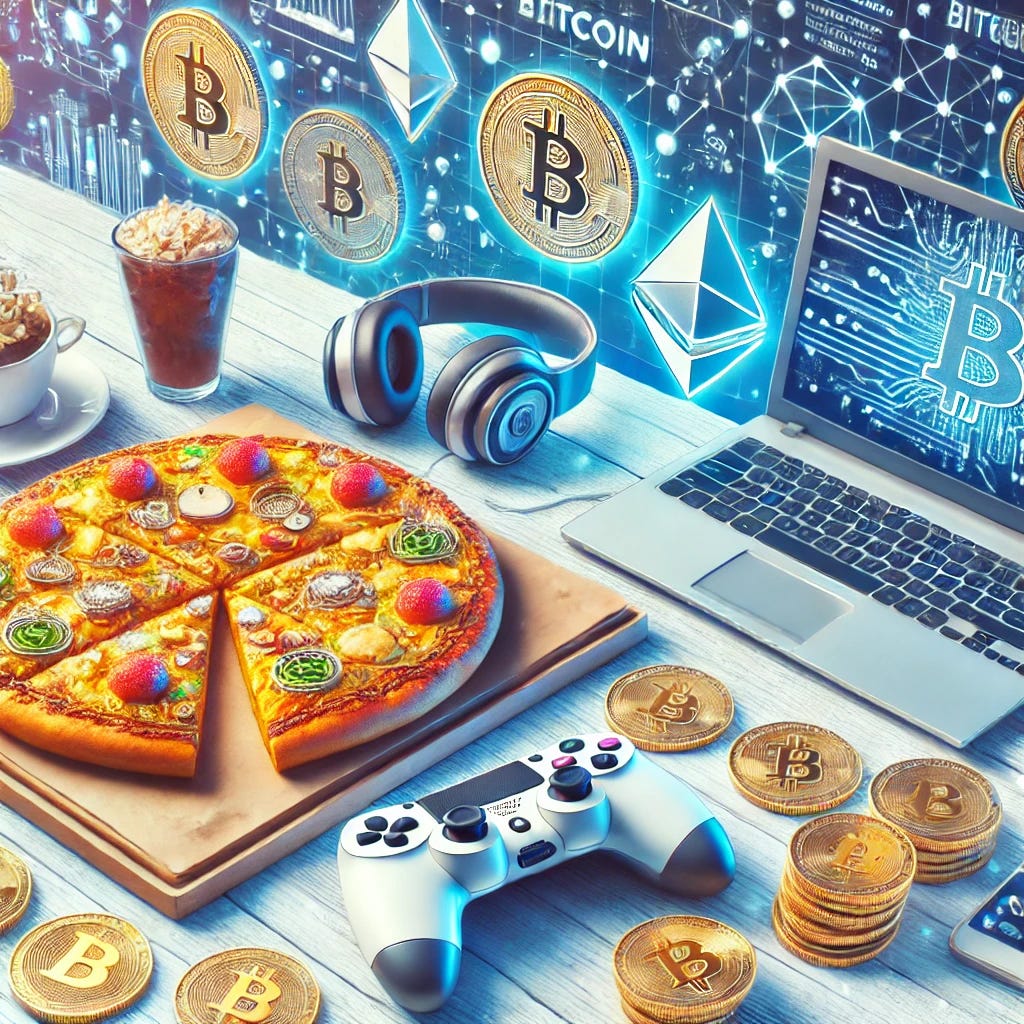
The famous Bitcoin Pizza transaction was not just a quirky early purchase; it was the first real-world proof that a digital token could function as money. In 2010, Bitcoin was still a niche experiment, and spending it on food showed that a purely digital asset could buy something tangible.
At that stage, value was still easy to understand: Bitcoin was worth what someone else would accept for it. The pizza trade turned an abstract protocol into a medium of exchange, and that was the first major shift in crypto’s value story.
The Speculation Era: Price Became the Story
As Bitcoin’s price rose, the market began to value not just what it could buy, but what it might become. By 2011 and later cycles, Bitcoin had moved from novelty to a tradable asset with a visible price history, and that changed how people talked about value altogether.
Once price charts entered the picture, the “most expensive purchase” narrative stopped being about daily spending and started being about opportunity cost. That pizza became iconic precisely because it showed how early utility can be dwarfed by later appreciation.
NFTs Changed the Meaning of Ownership
NFTs introduced a new idea: value does not have to come from physical scarcity alone. A digital image, clip, or collectible could command a high price if the market believed the token represented authentic ownership, provenance, and cultural significance.
Beeple’s Everydays: The First 5000 Days became the clearest example of this shift. The work sold for nearly $69 million, showing that buyers were no longer paying only for the image itself, but for the status, narrative, and on-chain proof attached to it.
A Timeline of “Most Expensive” Crypto Spending
Era Landmark Purchase: What It Signaled
In 2010, 10,000 BTC for two pizzas. Crypto as spendable money.
2011–2013 High-value early BTC trades and purchases Crypto as a speculative asset with a market price.
2017 CryptoKitties and collectible NFTs: Digital scarcity as a monetizable concept.
2021 Beeple’s $69M NFT sale: Digital ownership as culture, status, and investment.
This timeline shows a clear progression: from payment to speculation, to symbolic ownership. The asset itself changed less than the social meaning attached to it.
What Changed in People’s Minds
The biggest change was not technical; it was psychological. Early crypto users asked, “What can this buy?” Later buyers asked, “What will this be worth?” NFT collectors asked another question: “What does ownership mean if the object is digital?”
That evolution explains why “the most expensive crypto purchase” keeps changing in form. First it was food, then digital collectibles, then tokenized art, and each step expanded the definition of value in the internet age.
Why This Matters Now
Crypto is no longer just about money moving from one wallet to another. It is now a system for expressing utility, status, identity, and provenance in digital form.
That matters because the next “most expensive purchase” may not look expensive in the traditional sense at all. It could be a digital right, a tokenized asset, or a piece of online-native culture that people value more for what it represents than for what it physically is.
FAQs
1) Why is the Bitcoin Pizza story so important?
It was the first famous example of Bitcoin being used for a real-world purchase, which helped prove that crypto could function as money.
2) Why did NFTs become so expensive?
NFT prices reflected scarcity, provenance, cultural attention, and speculative demand, not just the visual content itself.
3) What does the price history of crypto tell us?
It shows that value in crypto has expanded from utility to speculation to ownership of digital culture.
4) Is the most expensive crypto purchase always about art?
No. The “most expensive” purchase can also be a transaction, a collectible, or a tokenized form of ownership, depending on the market phase.