Building a crypto wallet is simple. You just need to integrate the features, connect to the blockchain, design a user interface, launch it in the market, and boom… You have succeeded in the market. This is what most founders think before building a wallet. But really, that’s not the case.
In reality, security architecture becomes complex, compliance questions start to surface, and users don’t adopt or trust it the way you thought. So more than just building an app, you’re building a financial trust infrastructure. Market leaders like Metamask and Trust Wallet succeed not because of features or user interface. Their strategic decisions on security, compliance, positioning, and monetization made them succeed.
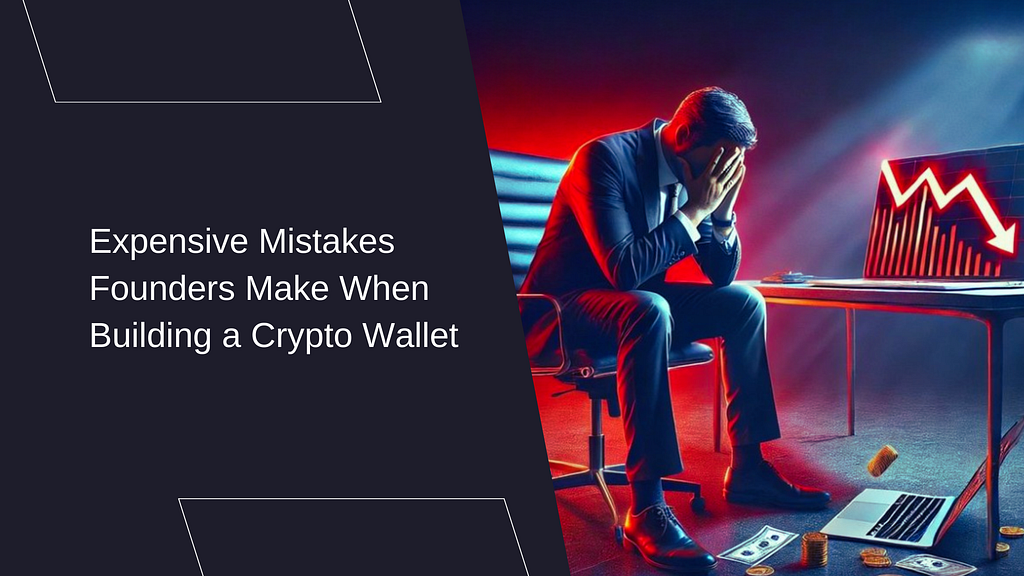
As a founder, you need to be careful when building a crypto wallet. Even a small mistake can become expensive and irreversible. In this article, we’ll break down some of the most common mistakes founders make when building a crypto wallet, so you (as a new founder) can avoid them.
Building a Wallet Before Validating
One of the most common mistakes crypto wallet founders make is building a wallet and launching it without validating real user problems. They simply incorporate the most cutting-edge technologies, support additional chains, and offer an improved user interface and faster performance. And see, users, are not switching even though they offer a better wallet.
Generally, users switch to another wallet when the wallet really solves their pain points. So instead of competing with features, validate and launch a wallet that users actually need. Skipping validation means you’re building wallets that nobody needs, competing directly with giants instead of carving a niche, and identifying positioning problems too late. So before building, perform validation by asking real potential users what frustrates them most and identify their painful problem.
Underestimating Security
Generally, crypto transactions are irreversible. So if funds are stolen, it is difficult to reverse them. Thus, failing to prioritise security results in depleted user funds, class-action lawsuits, platform delisting from the market, and a downturn in brand trust and reputation. Most founders consider security as something you can add later, which makes security mistakes the most expensive.
A robust security architecture is the foundation of your wallet protection. The generation of private keys, the storage of keys, the signing of transactions, the detection of phishing and fraudulent contracts, and the operation of backups and recovery are all determined by security architecture. So, consider building a robust layer of security architecture from the start, allocate budget for regular security audits, and regularly update your platform to current compliance trends.
Ignoring Regulatory and compliance
Most founders assume that decentralization protects their wallet, copy features from competitors without understanding their legal structure, focus only on product, and consider compliance is something that can be figured out later. But in reality, regulators don’t consider how innovative your UI is or how advanced your feature is. They care about financial risk, consumer protection, and money movement.
Even if your wallet is non-custodial, some features, such as fiat on-ramps, token swaps, and staking services, can pose compliance risks. So to avoid this mistake, you need to talk to crypto-native legal counsel early, incorporate features for different jurisdictions, and avoid blindly copying from other wallets.
Overloading Features
Most wallet founders think that if we offer more than our competitors, users will choose us. As a result, they overload the wallet with features such as swaps, NFTs, staking, yield farming, cross-chain bridges, portfolio tracking, advanced analytics, and social features.
But overloading features always leads to confusion, slower performance, higher security risks, and engineering distraction. So at the early stage, it is vital to focus on the core job and execute it extremely well to succeed. Add new features only when your core feature is stable, your user retention is strong, and you have a team to support complexity.
No Sustainable Monetization Strategy
When building a wallet, you pay for node infrastructure, engineering salaries, security audits, customer support, compliance & legal, and ongoing maintenance & updates. So it is important to create a sustainable monetization strategy. If you’re offering wallet infrastructure that doesn’t match your income, you will end up draining your company.
But this doesn’t mean you need to charge for everything. Ensure your monetization model is accepted by users. Strong wallet monetization models often include transparent transaction fees, swap aggregation fees, premium features (advanced analytics, automation tools), B2B APIs or infrastructure services, and partnerships with on-ramps or DeFi protocols. Always decide your monetization philosophy early and ensure your revenue aligns with your users’ value.
Considering Trust as a Marketing Problem
Trust is not something that can be built with social platforms or influencer campaigns. Founders often consider trust as a marketing problem instead of a product decision. But trust can be earned only through transparent communication, public audits, clear security documentation, fast response during incidents, and consistent uptime. As a founder, it is important to build trust among users.
Final Thoughts
Building a wallet isn’t just about incorporating advanced features. It involves making high-stakes decisions around security, compliance, validation, positioning, and monetization. And most wallets fail not because of bad code, but due to a lack of strategic decision-making. If you’re about to build a crypto wallet, ensure you avoid these mistakes during your crypto wallet development. As a founder, if you stay focused, prioritise trust, and design your wallet for sustainability, then you’re already ahead of most founders entering the market.
Expensive Mistakes Founders Make When Building a Crypto Wallet was originally published in Coinmonks on Medium, where people are continuing the conversation by highlighting and responding to this story.