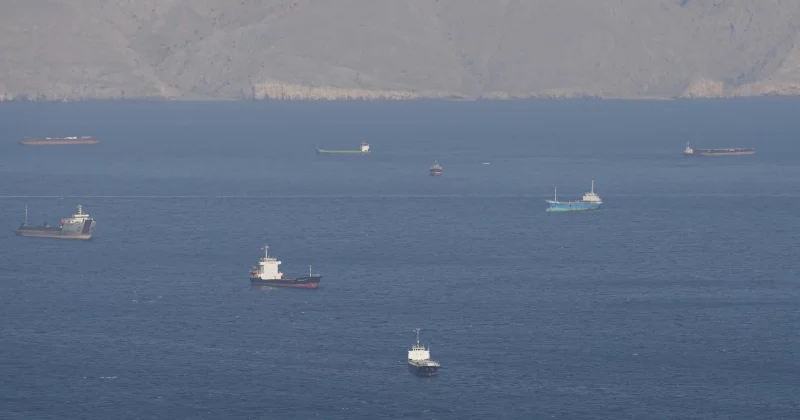
European Union expands sanctions on Iran over Strait of Hormuz navigation issues, and crypto is caught in the crossfire
New EU sanctions targeting entities obstructing passage through the world's most critical oil chokepoint could ripple through Bitcoin mining and Iran's $7.8 billion crypto economy.
Share
Add us on Google by Editorial Team May. 12, 2026The European Union expanded its sanctions regime against Iran on April 20, zeroing in on individuals and organizations accused of obstructing navigation through the Strait of Hormuz. About 20% of the world’s oil trade squeezes through that narrow waterway, making it arguably the most strategically important bottleneck on the planet.
The sanctions also come with a pledge to deepen cooperation with Gulf countries on regional security and navigation.
Iran’s crypto machine and the sanctions squeeze
Iran legalized Bitcoin mining back in 2019, and the country quickly became a meaningful player in global hash rate production. Cheap, subsidized electricity made mining operations economically attractive, and the country’s contribution to total Bitcoin hash rate has been estimated at somewhere between 4% and 7%.
That mining infrastructure, combined with widespread stablecoin usage, has turned Iran’s crypto sector into a financial lifeline. The ecosystem generates an estimated $7.8 billion annually.
Reports from April 2026 indicate Iranian authorities have been ramping up crypto activities specifically to bypass international restrictions. The Islamic Revolutionary Guard Corps reportedly moved $3 billion through digital assets in 2025 alone.
What this means for Bitcoin’s hash rate
If sanctions disrupt Iran’s energy supply chains, or if enforcement tightens around the entities providing power to mining farms, the country’s hash rate contribution gets squeezed. Experts have flagged a potential 5-7% decline in global Bitcoin hash rate as a plausible outcome.
The last time a comparable hash rate disruption occurred was China’s mining ban in 2021, which temporarily wiped out more than half of global hash rate. A 5-7% drop wouldn’t be nearly that dramatic, but it’s enough to create short-term trading turbulence.
Analysts have described the situation as a cat-and-mouse game: greater enforcement on traditional fiat channels has historically pushed sanctioned actors deeper into crypto, with every evasion route closed opening another on a different chain or through a different mixer.
The regulatory precedent problem
Platforms that inadvertently process transactions linked to sanctioned Iranian entities face growing compliance risk. The US Treasury has already moved against crypto mixers and exchanges with ties to sanctioned nations, and the EU expanding its own framework suggests transatlantic coordination on crypto-related sanctions enforcement is tightening.
Iran’s prior sanctions history offers a useful timeline. The initial wave of major sanctions hit in 2018, and the country’s pivot toward crypto accelerated almost immediately afterward. Legalizing mining in 2019 was a direct response. Each tightening of the sanctions screw has correlated with deeper crypto adoption by Iranian entities, not less.
What investors should actually watch
For crypto investors, the immediate concern is hash rate disruption. If Iran’s mining operations face meaningful downtime, expect short-term Bitcoin price volatility.
One metric worth tracking closely: the percentage of Bitcoin hash rate attributable to jurisdictions under international sanctions. If that number creeps up, expect regulatory pressure on the mining sector to intensify, regardless of where the miners are physically located.
Disclosure: This article was edited by Editorial Team. For more information on how we create and review content, see our Editorial Policy.