How Cache-Augmented Generation (CAG) and massive context windows are replacing the retrieval pipeline.
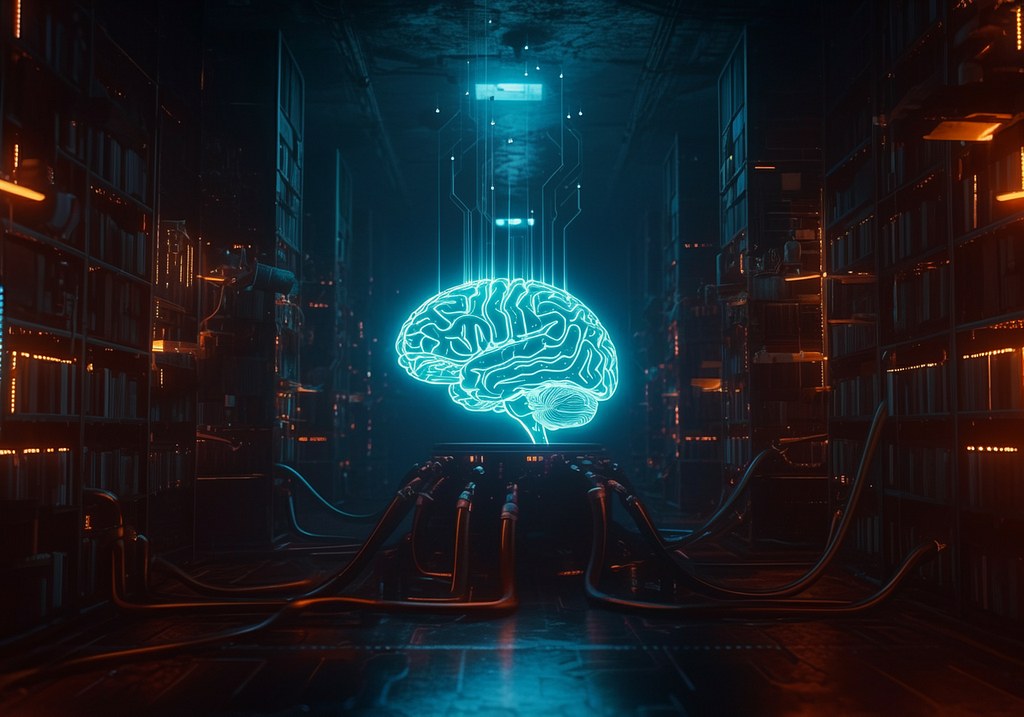
The future of AI memory is shifting from retrieving fragmented pages to ingesting whole libraries in an instant.
Let’s talk about the biggest, quietest revolution happening in Artificial Intelligence right now.
If you’ve been paying attention to enterprise AI over the last few years, you’ve likely been fed a steady diet of three letters: RAG (Retrieval-Augmented Generation). Coupled with vector databases, RAG has been the undisputed heavyweight champion of the GenAI world. But as someone who spends their days evaluating AI architectures — and occasionally blowing off steam at the kickboxing gym — I’m here to tell you that the reigning champ has a glass jaw.
We are moving away from the “vibe-based” era of semantic retrieval. The future is precise, structural, and — brace yourselves — largely vector-free. Let’s dive in.
I. The Hook: Goodbye Vibes, Hello Logic

Relying on vector databases for precise reasoning is like hiring a bouncer to do your taxes. Sure, he can group things by ‘vibes,’ but you’re probably going to end up in jail.
For the past few years, the foundational premise of RAG has been simple: connect a Large Language Model (LLM) to a massive, external database so it stops making things up (Lewis et al., 2020). It was a brilliant patch for the AI’s “amnesia.”
But there’s a massive epistemological flaw in the standard RAG pipeline: semantic similarity is not the same as logical relevance.
Standard RAG takes your beautiful, carefully structured documents, tears them into arbitrary 500-word chunks, converts them into high-dimensional numerical vectors, and fetches whatever “sounds” closest to your prompt. In high-stakes domains like law, medicine, or finance, this is a disaster waiting to happen. You don’t want a lawyer who just catches the “vibe” of a contract; you want someone who reads the exact clauses in order.
Thanks to massive context windows (models that can ingest up to 1 million tokens at once) and Cache-Augmented Generation (CAG), we can now completely bypass traditional retrieval for many tasks. We are literally feeding entire libraries directly into the AI’s short-term memory. But abandoning vectors introduces a whole new arena of economic, latency, and cybersecurity trade-offs.
“Relying on vector databases for precise reasoning is like hiring a bouncer to do your taxes. Sure, he can group things by ‘vibes,’ but you’re probably going to end up in jail.” — Dr. Mohit Sewak
ProTip: Stop thinking of AI memory as a single database. The future of enterprise AI retrieval is fluid, adaptive, and highly dependent on the topology of your specific data.
II. The Stakes: The Hallucination Problem 2.0

Traditional Vector RAG shreds the author’s intended structure, narrative, and hierarchy, leaving you with a disjointed pile of context.
Let’s talk about why executives and policymakers need to care about this right now. They are currently pouring millions of dollars into “RAG Stacks” — embedding models, orchestration tools, and vector databases. But this infrastructure might be rapidly depreciating.
Why? Because traditional RAG solved primary LLM hallucinations only to introduce “Retrieval-Induced Hallucinations.” This is when an AI model confidently feeds you a completely wrong answer because it was fed the right words in the entirely wrong context.
Dense vectors are notoriously terrible at exact keyword matching and what researchers call “negative rejection” — the vital ability of an AI to look at a retrieved document and say, “Nope, the answer isn’t in here” (Chen et al., 2023). Industry benchmarks like RAGChecker are repeatedly exposing the vector database as the weakest link in the pipeline (Ru et al., 2024; Pradeep et al., 2024).
Translation Note: The Vector Database Flaw Imagine a massive, beautifully organized library. Traditional Vector RAG is like tearing every single page out of every book, throwing them all into a giant pile in the center of the room, and then pulling out the five pages that “sound” the most like your question. Sure, you get the words, but you completely destroy the author’s intended structure, narrative, and hierarchy.
Fact Check: Did you know that early benchmarks showed LLMs utilizing standard RAG fail catastrophically at “negative rejection”? They are mathematically coerced by the semantic similarity of the retrieved vectors to hallucinate an answer even when the text doesn’t explicitly support it (Chen et al., 2023).
III. Deep Dive 1: The End of “Vibe Retrieval” (Structural & Lexical RAG)
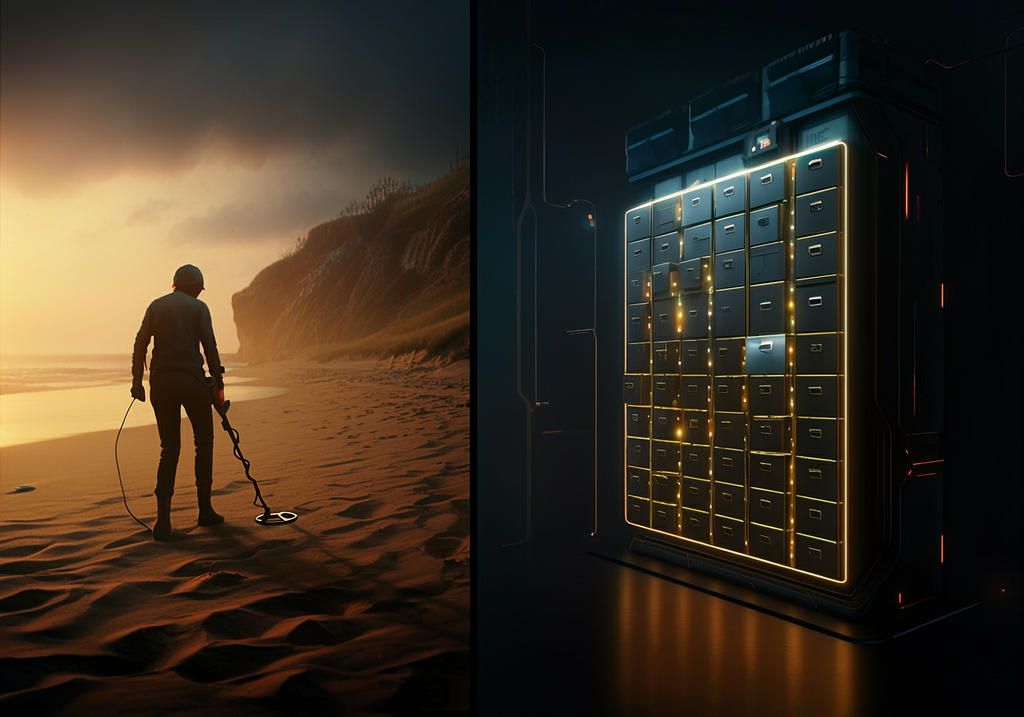
Structural RAG trades the aimless metal detector of vector search for methodical, precise filing.
So, how do we fix the torn-up library? We go back to basics, but with a modern twist. Welcome to Embedding-Free RAG (Maghakian et al., 2025).
Recently, classical, exact-match Information Retrieval (IR) methods — like the old-school BM25 algorithm — have been routinely beating cutting-edge AI embeddings in specialized domains (Huly et al., 2024). Take medicine, for example. The terms hyperthyroidism and hypothyroidism occupy very similar “vector spaces” because they appear in similar contexts. But medically, they mean the exact opposite! Lexical, exact-match search catches this; vibe-based vectors often fumble it (Xiong et al., 2024).
But it gets cooler. Instead of flattening text into a pile of pages, researchers are building Hierarchical Tree-Organized Indices. Systems like PageIndex build an explicit Table of Contents for a document and let the AI “reason” its way down the correct branches (Mysore, 2026). If the document lacks a natural structure, systems like RAPTOR cluster the text and build a mathematical tree from the bottom up (Sarthi et al., 2024).
From a Responsible AI perspective, this structural RAG is a massive win. Retrieving information via explicit logical reasoning creates an auditable trail. You can actually trace exactly why the AI fetched the data.
Translation Note: Hierarchical Reasoning Vector RAG is like using a metal detector on a sandy beach — you’re just walking around hoping something beeps because it’s close by. Structural RAG is like using a well-organized filing cabinet with an alphabetized index. It’s methodical, precise, and logical.
“If you destroy the structure of human knowledge to fit it into an algorithm, the algorithm isn’t learning; it’s just shredding.” — Dr. Mohit Sewak
ProTip: If you are building AI for finance or legal contracts, test Stanford’s DOS RAG (Document’s Original Structure) approach. Simply passing lexically relevant sections into the prompt in their strict chronological order often outperforms million-dollar vector setups (Laitenberger et al., 2025).
IV. Deep Dive 2: Connecting the Dots (GraphRAG and Generative IR)

GraphRAG is the red string that turns isolated data points into an undeniable map of evidence.
If standard RAG struggles with structure, it absolutely chokes on the “Multi-Hop Dilemma.”
Imagine you ask an AI: “How is Company A connected to Company C?” Standard RAG fails because the connection relies on an unmentioned Company B. It can’t “connect the dots.”
Enter GraphRAG. This is the shift from searching for “strings” (text) to searching for “things” (entities). Knowledge Graphs explicitly map relationships as nodes (entities) and edges (connections). By traversing this graph, GraphRAG neutralizes semantic hallucinations because it treats the absence of a relationship as concrete data (Han et al., 2025a; Han et al., 2025b). It’s literally building a map of facts (Neo4j, 2024).
Then, there is the mad-scientist territory of Generative Information Retrieval, specifically the Differentiable Search Index (DSI). Instead of using an external database at all, researchers are experimenting with baking the document index directly into the LLM’s “brain” (parametric memory) so it can autoregressively generate Document IDs from thin air (Tay et al., 2022). It’s fascinating, though still a bit too experimental for your company’s HR chatbot.
Translation Note: GraphRAG Picture a classic detective movie. Standard RAG is the detective looking at isolated polaroid photos scattered on a desk. GraphRAG is the detective building the corkboard on the wall, complete with red string connecting the suspects, times, and locations, allowing the AI to see the whole underlying conspiracy.
Fact Check : Generative Information Retrieval (like DSI) actually functions mathematically identically to Multi-Vector Dense Retrieval inside the Transformer’s cross-attention layers. The AI isn’t doing magic; it’s compressing vectors in a fundamentally new way!
“Data without relationships is just noise. GraphRAG is the red string that turns noise into evidence.”
V. Deep Dive 3: “Don’t Do RAG” — The Shift to Cache-Augmented Generation (CAG)

Cache-Augmented Generation (CAG) bypasses retrieval completely by keeping the entire “textbook” open on the AI’s desk.
Now we arrive at the heavy hitter. Why retrieve document fragments at all if your AI has a 1-million-token context window? Why not just upload the entire 200-page manual at once?
This is Cache-Augmented Generation (CAG) (Chan et al., 2024).
For static, bounded datasets (like a codebase, an employee handbook, or a novel), pre-loading the entire corpus into the model’s transient memory categorically defeats both sparse and dense RAG. The mechanics rely on Prompt Caching (Gim et al., 2023). By storing the precomputed attention states (the KV cache) of the document on the server, the AI can answer dozens of questions about that document instantly without recalculating the text.
To keep the immense compute costs down, researchers are inventing “Adaptive Focus Memory,” compressing the KV cache dynamically so the AI remembers the crucial details without frying the GPUs.
Translation Note: KV Caching / CAG Think of standard RAG like a student taking an open-book exam, but for every single question, they have to physically walk to the library, find a paragraph, read it, and walk back to their desk. CAG is the student just keeping the entire textbook open on their desk for the duration of the test.
“Memory isn’t about storing everything; it’s about caching what matters.”
ProTip: If your corpus is under 500,000 tokens and rarely changes (like a static company policy), stop building complex retrieval pipelines. Use CAG with prompt caching. The latency drops to near-zero for subsequent queries.
VI. Debates and Limitations (Cost, Latency, and Security Paradoxes)

In cybersecurity, every new convenience — like cached prompts — is just a new door for an attacker to walk through.
Before we throw our vector databases into the digital bonfire, we need a reality check.
First, the Economic and Latency Reality: Brute-forcing a 1-million token window isn’t cheap. Processing that much text can cost upwards of $15 per query and take 30 agonizing seconds before the first word is generated.
Then, there are the massive cybersecurity implications — which is right up my alley.
GraphRAG introduces a terrifying new attack surface called Relation Injection (Liang et al., 2025). While it’s immune to traditional text poisoning, hackers can subtly force the Knowledge Graph to draw a fake “red string” (relationship) between two entities. If they poison a central hub, that lie cascades across thousands of users.
And CAG? It has a glaring privacy vulnerability. Stanford researchers recently proved that global API prompt caching introduces timing side-channel attacks (Gu et al., 2025).
Translation Note: Timing Side-Channel Attacks Imagine breaking into a hotel room and knowing someone was just there because the bed is still warm. Hackers can do this with your data. If an API responds suspiciously fast to a prompt about a secret merger, hackers can infer that the document is already “warm” in the cache — meaning someone else at your company was just asking the AI about it!
“In cybersecurity, every new convenience is just a new door for an attacker to walk through.” — Dr. Mohit Sewak
Fact Check: Due to the risk of side-channel timing attacks, deploying Cache-Augmented Generation for highly sensitive corporate data currently necessitates localized, private infrastructure rather than shared public APIs.
VII. The Path Forward / Implications (Hybrid, Agentic Architectures)
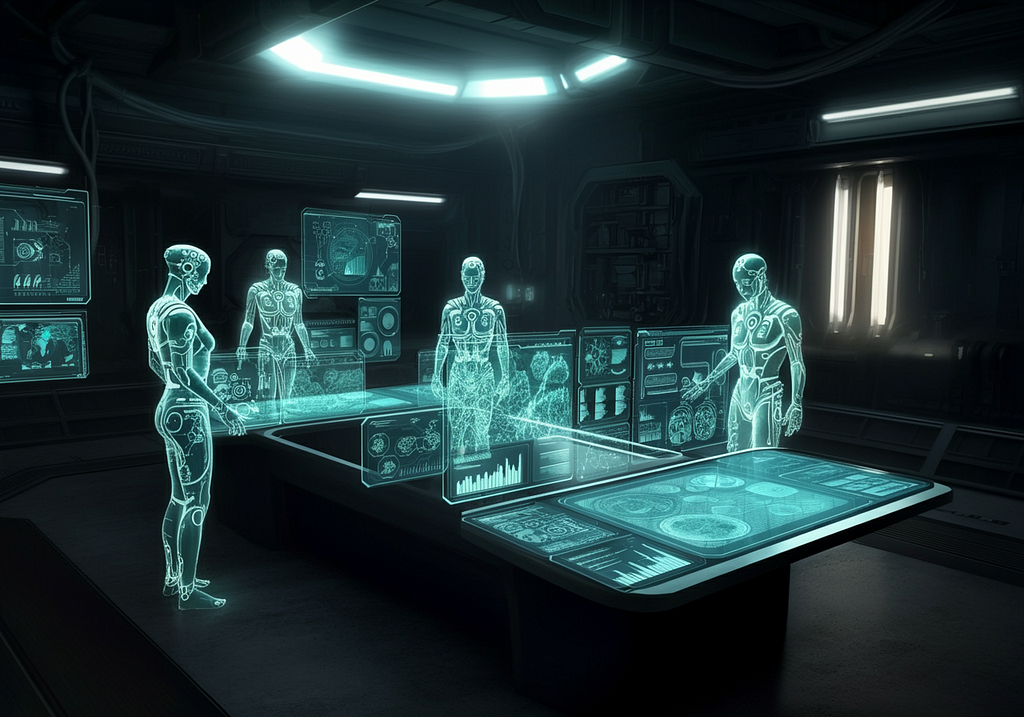
The future belongs to Hybrid Agentic Frameworks: don’t build a database, build a digital detective agency.
So, what is the ultimate verdict?
Vector databases are not dead. But we must dispel the monolith. Their role is shifting from the “sole arbiter of relevance” to merely the “first, coarsest filter” in a much larger machine.
The 2026 State-of-the-Art Architecture is the Hybrid Agentic Framework (Agrawal & Kumar, 2025). Models will operate like autonomous researchers. They will use ultra-fast vector or lexical (BM25) search to cast a wide net (Wang et al., 2024). They will route that data into a GraphRAG engine to establish factual, red-string relationships. Finally, they will use Cache-Augmented Generation to synthesize the final answer, guaranteeing context and citations (Ma et al., 2024).
My actionable advice to enterprise leaders? Stop buying off-the-shelf, vector-only RAG pipelines for your high-stakes domains. You are buying a pager in the era of smartphones. Invest in modular architectures that route queries based on the topology of the data and the exactness required by the user.
“Don’t build a database; build a digital detective agency.”
ProTip: Audit your current GenAI pipelines using tools like RAGChecker. Identify if your failures are due to semantic “vibe” mismatches or multi-hop logic failures, and modularize your stack accordingly.
VIII. Conclusion

The era of “vibes” is over. It’s time to embrace logic and reasoning over knowledge.
We are moving past the “vibe-based” era of Generative AI. The days of shredding documents, throwing them into a mathematical blender, and hoping the AI spits out truth are ending.
The goal of artificial intelligence is no longer just retrieving text; it is reasoning over knowledge. Whether that is achieved through explicit hierarchical tree structures, red-string relational graphs, or the massive brute-force cached memory of CAG, the future demands structural integrity, uncompromised context, and rigorous traceability.
So finish your tea, go look at your RAG pipeline, and ask yourself: Are you relying on vibes, or are you ready to embrace logic?
IX. References

Essential reading on the transition from RAG to CAG and beyond.
Structural and Tree-Based Retrieval
- Huly, O., Pogrebinsky, I., Carmel, D., & Kurland, O. (2024). Old IR Methods Meet RAG. Proceedings of the 47th International ACM SIGIR Conference. Link
- Khuperkar, A. (2026). Vector vs vectorless RAG. Why embeddings still matter: A FinanceBench benchmark. Medium.
- Laitenberger, A., Manning, C. D., & Liu, N. F. (2025). Stronger Baselines for Retrieval-Augmented Generation with Long-Context Language Models. arXiv. Link
- Maghakian, J., Sinha, R., & Kaur, G. (2025). Embedding-Free RAG. Findings of EMNLP. Link
- Mysore, V. (2026). What is PageIndex? How to build a vectorless RAG system (No embeddings, no vector DB). Medium.
- Sarthi, P., et al. (2024). RAPTOR: Recursive Abstractive Processing for Tree-Organized Retrieval. ICLR. Link
- Xiong, G., Jin, Q., Lu, Z., & Zhang, A. (2024). Benchmarking Retrieval-Augmented Generation for Medicine. Findings of the Association for Computational Linguistics (ACL). Link
GraphRAG and Knowledge Graphs
- Han, H., et al. (2025a). Retrieval-Augmented Generation with Graphs (GraphRAG). arXiv. Link
- Han, H., et al. (2025b). RAG vs. GraphRAG: A Systematic Evaluation and Key Insights. arXiv. Link
- Liang, J., et al. (2025). GraphRAG under Fire. arXiv. Link
- Neo4j. (2024). The GraphRAG manifesto: Adding knowledge to GenAI. Neo4j.
Generative Information Retrieval
- Tay, Y., et al. (2022). Transformer Memory as a Differentiable Search Index. arXiv. Link
Long-Context, Memory, and Cache-Augmented Generation (CAG)
- Agrawal, R., & Kumar, H. (2025). Enhancing Cache-Augmented Generation (CAG) with Adaptive Contextual Compression. arXiv. Link
- Chan, B. J., Chen, C.-T., Cheng, J.-H., & Huang, H.-H. (2024). Don’t Do RAG: When Cache-Augmented Generation is All You Need for Knowledge Tasks. arXiv. Link
- Chen, J., et al. (2023). Benchmarking Large Language Models in Retrieval-Augmented Generation. arXiv. Link
- Gim, I., et al. (2023). Prompt Cache: Modular Attention Reuse for Low-Latency Inference. arXiv. Link
- Gu, C., et al. (2025). Auditing Prompt Caching in Language Model APIs. arXiv. Link
- Lewis, P., et al. (2020). Retrieval-Augmented Generation for Knowledge-Intensive NLP Tasks. arXiv. Link
- Ma, X., et al. (2024). VISA: Retrieval Augmented Generation with Visual Source Attribution. arXiv. Link
- Pradeep, R., et al. (2024). Ragnarök: A Reusable RAG Framework and Baselines for TREC 2024 Retrieval-Augmented Generation Track. arXiv. Link
- Ru, D., et al. (2024). RAGChecker: A Fine-grained Framework for Diagnosing Retrieval-Augmented Generation. arXiv. Link
- Wang, X., et al. (2024). Searching for Best Practices in Retrieval-Augmented Generation. Proceedings of the Conference on Empirical Methods in Natural Language Processing (EMNLP). Link
Disclaimer: The views expressed herein are personal. AI assistance was used in researching for and in drafting of this article and generating images. License CC by ND 4.0.
Don’t Do RAG was originally published in DataDrivenInvestor on Medium, where people are continuing the conversation by highlighting and responding to this story.