defi on concrete
--
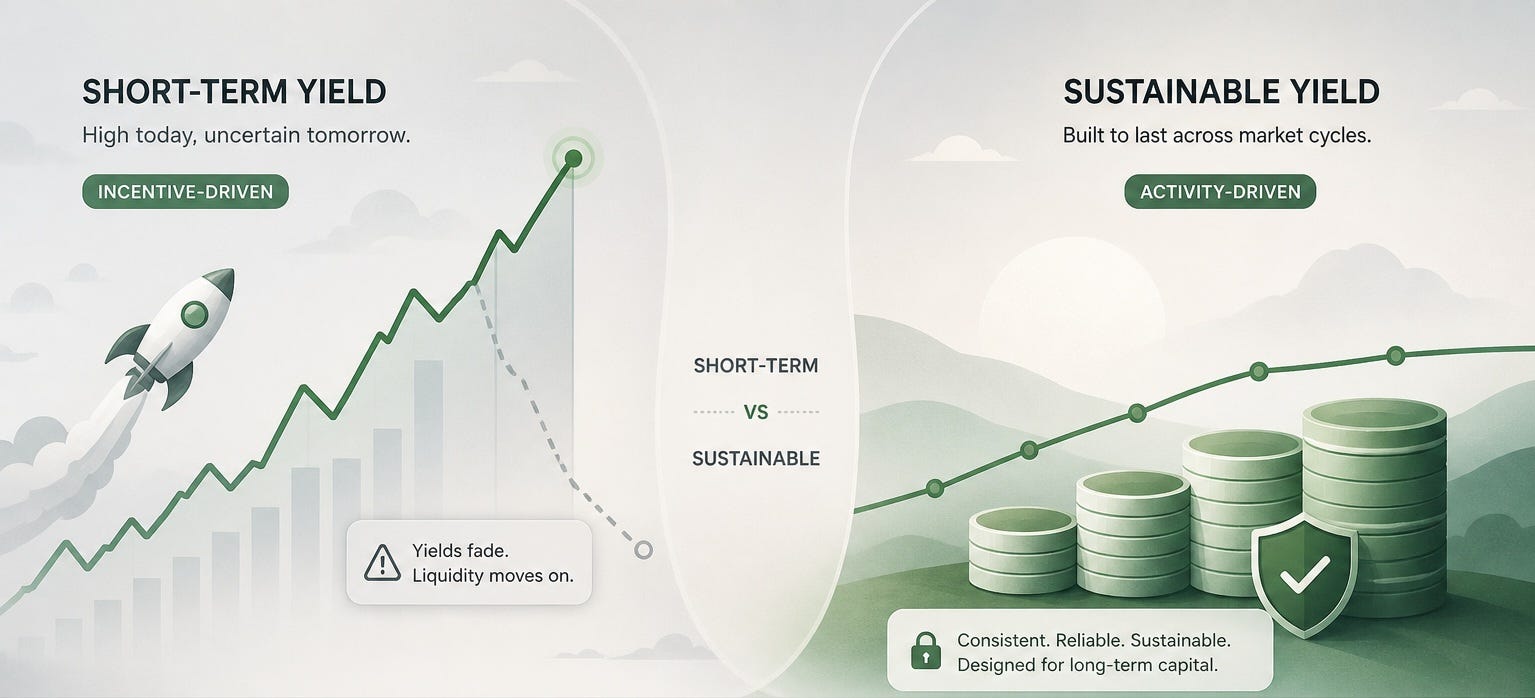
What Makes a DeFi Strategy Actually Sustainable? DeFi follows a familiar cycle: new protocols launch with high APYs, capital floods in, yields compress, and liquidity moves on. What looks promising rarely lasts. So the real question isn’t “what yields the most?” — it’s “what survives?” A sustainable yield strategy focuses on consistency over time. It should generate reliable returns, avoid heavy dependence on token incentives, and remain viable across market conditions. This is about risk-adjusted yield, not peak APY. A key distinction is between real yield and temporary yield. Real yield comes from actual activity like trading fees, lending demand, or arbitrage. Temporary yield often comes from emissions or liquidity incentives, which decline over time. Sustainable DeFi strategies prioritize real, usage-driven returns. Market conditions also matter. Liquidity depth, volatility, and user demand all shape performance. Some strategies only work in specific environments, while durable ones adapt across cycles. Costs are another hidden factor. Slippage, rebalancing, and execution fees can erode returns. A strategy that looks strong on paper may underperform once these are considered. Sustainable approaches focus on net returns, not headline numbers. This is where managed DeFi and DeFi vaults come in. By diversifying across strategies, continuously adjusting positions, and optimizing capital allocation, vaults aim to deliver more consistent outcomes. Concrete vaults reflect this shift. They prioritize sustainable yield sources, adapt to market changes, and reduce reliance on short-term incentives. For example, Concrete DeFi USDT offers up to ~8.5% stable yield. While less flashy than high-risk opportunities, its consistency can outperform over time and attract long-term capital. DeFi is moving beyond short-term yield chasing toward durable, system-driven strategies. In the long run, sustainability — not peak returns — will define success. Explore Concrete at: https://app.concrete.xyz/earn