DeFi Doesn’t Remove Trust — It Engineers It
--
DeFi was built on a powerful idea:
“Don’t trust people. Trust code.”
For a while, that narrative worked.
Smart contracts replaced intermediaries.
Transactions became transparent.
Users gained direct control over their assets.
It felt like trust had been removed from the system entirely.
But as DeFi evolved, something became clear:
Trust didn’t disappear. It just moved.
The Myth of “Trustless” Systems
DeFi is often described as “trustless.”
You’ve heard it before:
- Code is law
- No intermediaries needed
- Fully decentralized systems
But in reality, no system is truly trustless.
Every system — on-chain or off-chain — relies on assumptions.
The real question isn’t:
“Is there trust?”
It’s:
“Where does trust exist — and how is it managed?”
Where Trust Actually Lives in DeFi
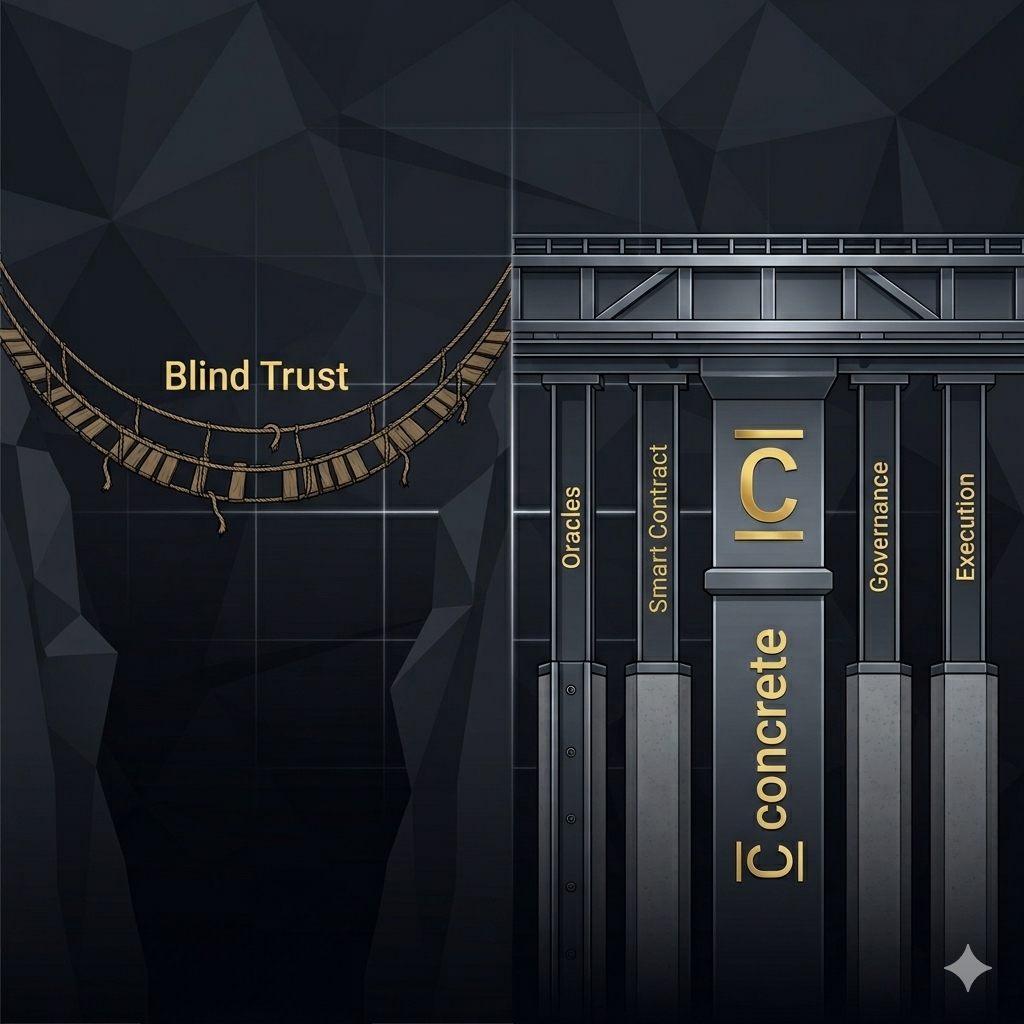
Even in fully on-chain environments, trust is embedded across multiple layers.
You trust:
- Smart contracts to execute as written (and be bug-free)
- Governance systems to make rational and fair decisions
- Oracles to provide accurate external data
- Bridges to securely transfer assets across chains
- Execution layers to process transactions reliably
None of these are trustless.
They are trust-dependent systems — just structured differently than traditional finance.
The difference is that trust is often abstracted away, not eliminated.
The Problem With “Decentralization Theatre”
As DeFi grew, many systems began to optimize for the appearance of decentralization.
But appearance is not the same as resilience.
Consider:
- Multisigs that concentrate control in a few hands
- DAOs with low voter participation
- Timelocks that delay actions but don’t prevent harmful ones
- Systems that freeze under stress because they lack response mechanisms
These structures may look decentralized on the surface.
But in critical moments, they may not protect users effectively.
This creates what can be called:
Decentralization theatre — systems that signal trustlessness without fully delivering security.
From Trustless to Engineered Trust
A more realistic model is emerging:
Trust isn’t removed — it’s engineered.
Engineered trust means designing systems where:
- roles and responsibilities are clearly defined
- permissions are structured and limited
- constraints are enforced on-chain
- failure scenarios are anticipated and managed
This is how mature financial systems operate.
They don’t pretend trust doesn’t exist.
They design systems to manage it deliberately.
Why Operational Security Matters
Code is powerful — but it is not sufficient on its own.
Real-world systems require:
- continuous monitoring
- rapid response capabilities
- human judgment in edge cases
- layered security models
Smart contracts can execute predefined logic.
But they cannot anticipate every scenario.
They cannot adapt in real time to unexpected threats.
This is why operational security becomes essential.
The strongest systems are not just those that prevent failure —
But those that can respond when failure occurs.
How Concrete Approaches Trust
This is where a different approach to DeFi infrastructure becomes important.
Concrete is built on the idea that:
Trust should be explicit — not hidden.
Instead of relying on assumptions, Concrete focuses on:
- Engineered trust models with clearly defined roles
- Onchain enforcement combined with off-chain intelligence
- Systems designed for response, not just prevention
- Role-based architecture to control permissions
- Controlled execution environments for safer capital deployment
Concrete vaults are not just about generating yield.
They are about creating secure, managed DeFi systems that can operate reliably under real conditions.
This is a shift from ideology to engineering.
From “trustless claims” to operational reality.
The Bigger Shift in DeFi
DeFi is entering a new phase.
The industry is moving beyond simple narratives like “trustless systems.”
Instead, it is beginning to recognize that:
- trust is unavoidable
- systems must be designed to manage it
- resilience matters more than ideology
- infrastructure will be judged under stress — not in theory
The future of DeFi won’t belong to those who claim to eliminate trust.
It will belong to those who:
engineer it better, structure it clearly, and enforce it effectively.
Final Thought
Trust is not a flaw in financial systems.
It is a fundamental component.
The difference is how it is handled.
Hidden trust creates risk.
Engineered trust creates resilience.
And in DeFi, that distinction will define the next generation of infrastructure.
🚨 Explore Concrete at https://concrete.xyz/ 🚨