DeFi Doesn’t Remove Trust, It Engineers It
 0xp_qx03 min read·Just now
--
The Myth of “Trustless” Systems
DeFi was born from a powerful narrative:
“Don’t trust people. Trust code.”
It promised a world where intermediaries disappear, where “code is law,” and where systems run purely on deterministic logic. For a time, this idea fueled massive innovation across the space.
But as DeFi matured, reality caught up.
No system is truly trustless.
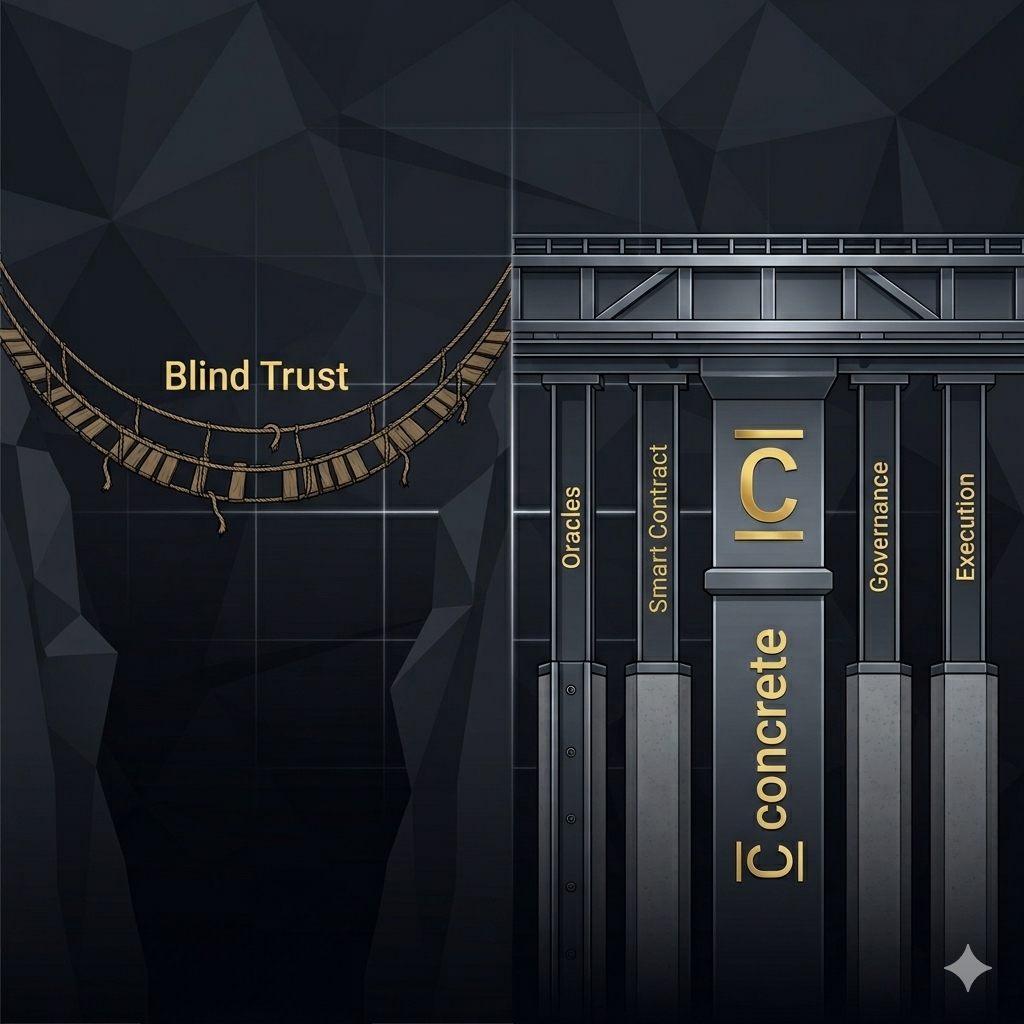
The real question isn’t whether trust exists, it’s where it exists and how it’s managed. What DeFi actually did wasn’t remove trust. It relocated and reshaped it.
Where Trust Actually Lives in DeFi
Under the surface, every DeFi protocol depends on multiple layers of trust:
• Smart contracts → You trust that the code is bug-free and behaves as intended
• Governance systems → You trust voters and delegates to act responsibly
• Oracles → You trust external data feeds to be accurate and tamper-resistant
• Bridges → You trust cross-chain mechanisms not to fail or be exploited
• Execution layers → You trust validators, sequencers, or block producers
None of these are inherently trustless.
They simply abstract trust behind technical systems, making it less visible but still critical. When failures happen, they almost always trace back to misplaced or misunderstood trust assumptions.
The Problem With “Decentralization Theatre”
DeFi often celebrates decentralization, but not all decentralization is meaningful.
This leads to what can be called “decentralization theatre”:
• Multisigs presented as security, but controlled by a small group
• DAOs with governance tokens, but minimal real participation
• Timelocks that delay actions, but don’t prevent malicious intent
• Systems that freeze or fail under stress because no one can act fast enough
These designs create the appearance of safety, without guaranteeing actual resilience.
There’s a crucial distinction here:
Decentralization ≠ Security
A system can be decentralized and still fragile. What matters is not how it looks, but how it behaves under pressure.
From Trustless to Engineered Trust
If trust cannot be removed, then it must be designed intentionally.
This is where the concept of engineered trust comes in.
Engineered trust means:
• Clearly defined roles and responsibilities
• Explicit permissions and boundaries
• Enforced constraints on system behavior
• Mechanisms to respond when things go wrong
This is how mature financial systems operate. Risk isn’t ignored, it’s structured, monitored and controlled.
DeFi is now entering that same phase.
Why Operational Security Matters
Pure code cannot handle every real-world scenario.
Edge cases, black swan events, and unexpected exploits require more than automation. They require:
• Continuous monitoring
• Rapid response mechanisms
• Human judgment in critical moments
• Layered security architecture
This is the foundation of DeFi security at scale.
Without operational security, even the most elegant smart contract can fail catastrophically.
A Different Approach: Concrete
This is where a new model emerges.
Concrete is built on the understanding that trust is unavoidable and therefore must be made explicit and enforceable.
Instead of hiding trust assumptions, Concrete designs around them:
• Explicit trust layers rather than implicit dependencies
• Systems built for response, not just prevention
• Onchain enforcement + off-chain intelligence working together
• Role-based architecture with clear accountability
• Controlled execution environments to limit risk exposure
Concrete vaults are not just about yield, they are about structured safety.
This approach prioritizes operational security over decentralization theatre, aligning more closely with what institutional DeFi requires: reliability, clarity, and resilience.
The Bigger Shift in DeFi
DeFi is evolving.
The early narrative of “trustless systems” is giving way to a more mature understanding:
• Trust is not eliminated, it is engineered
• Transparency matters more than ideology
• Resilience matters more than slogans
• Infrastructure is judged by performance under stress, not promises
The next generation of DeFi infrastructure will not be defined by who claims to remove trust.
It will be defined by who designs it best.
And in that future, engineered trust isn’t a compromise, It’s the foundation.
👉 Explore Concrete at https://concrete.xyz/