Crypto Was Built to Avoid Intermediaries. Regulation Found Them Anyway.
 Samuel AYODEJI4 min read·Just now
--
Why governments are no longer trying to stop blockchain – but are increasingly trying to control the financial activity around it
For years, crypto was described as something outside the system.
Outside banks.
Outside institutions.
Outside regulation.
That framing shaped much of the early conversation around blockchain technology:
a decentralized network where transactions could occur without intermediaries, gatekeepers, or centralized control.
But the landscape has changed.
Today, governments across the world are introducing licensing frameworks, stablecoin rules, custody obligations, market conduct requirements, and anti-money laundering standards for digital assets. Financial regulators that once treated crypto with caution are now building structured legal frameworks around it.
For beginners, this creates a confusing picture.
If blockchain was designed to operate without centralized control, why is regulation becoming increasingly central to the ecosystem?
To answer that question, it is important to understand where the real point of intersection lies.
How Traditional Regulation Works
Modern financial systems were built around intermediaries. Banks, payment providers, brokers, custodians, and exchanges all operate within legally recognized structures. Regulators supervise these entities through licensing, disclosure obligations, compliance requirements, and oversight mechanisms.
The logic is straightforward:
If financial activity passes through identifiable institutions, those institutions become the point through which risk can be monitored and controlled.
Regulation, in this sense, has always depended on visibility and accountability.
Blockchain Changed the Architecture
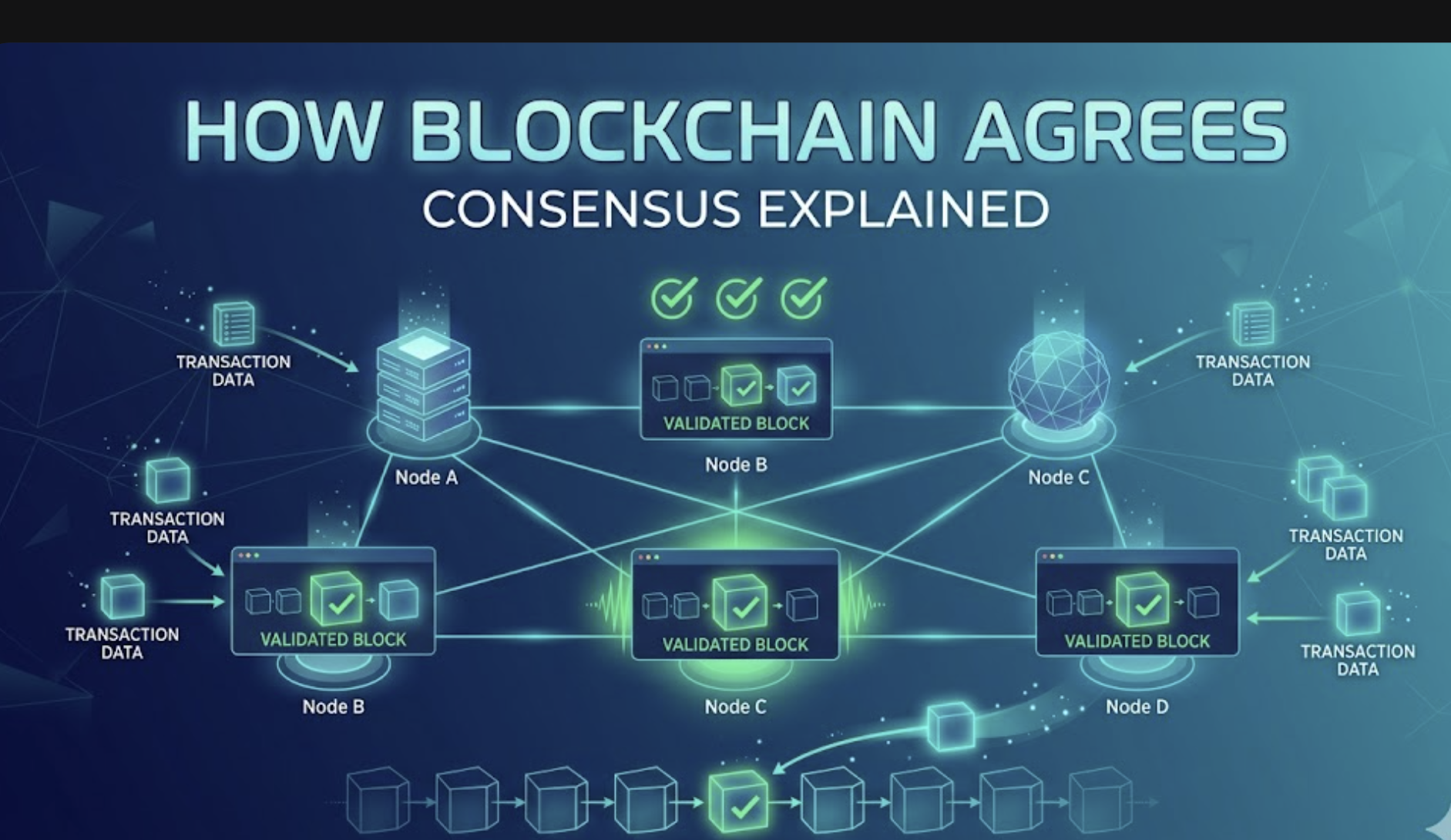
Blockchain systems introduced a different model. Rather than relying on a central authority to validate transactions, distributed ledger systems use:
- cryptographic verification
- consensus mechanisms
- decentralized network participation
- automated execution through smart contracts
Participation is not granted by a regulator or institution, but by compliance with the rules embedded into the protocol itself.
This architectural shift made something possible that traditional finance could not easily support:
the transfer of value without centralized coordination.
From this foundation, decentralized finance (DeFi) emerged.
The idea was simple:
remove intermediaries and allow users to interact directly with financial systems.
Lending, borrowing, trading, payments, and asset transfers could now occur through protocols rather than institutions.
A parallel financial environment began to form – one that was borderless, programmable, and increasingly economically significant.
The Regulatory Problem
For regulators, this created a structural challenge. Traditional regulation depends on identifiable actors:
- entities that can be licensed
- supervised
- sanctioned
- or compelled to comply
But decentralized systems were not originally designed around these actors.
So the key question became:
If the system was designed without intermediaries, what exactly is being regulated?
The Re-Emergence of Intermediaries
In practice, complete decentralization proved difficult. As adoption increased, intermediaries reappeared.
Centralized exchanges simplified trading.
Custodians secured assets on behalf of users.
Stablecoin issuers facilitated payments and liquidity.
These entities became the bridge between blockchain infrastructure and the broader financial system. Thus, the bridge created something regulators understand very well: points of control.
This is why modern digital asset regulation is increasingly focused not on blockchain technology itself, but on:
- exchanges
- custodians
- wallet providers
- stablecoin issuers
- payment facilitators
- and other service providers operating around the ecosystem
The target is not the code alone.
It is the financial activity surrounding it.
What Is Actually Being Regulated?
One of the biggest misconceptions in digital asset policy discussions is the belief that governments are trying to regulate blockchain itself. In most cases, they are not.
Regulators are generally not attempting to prohibit distributed ledger systems, consensus mechanisms, or cryptographic infrastructure.
Instead, the focus is on:
- consumer protection
- market integrity
- anti-money laundering compliance
- systemic financial risk
- custody and safeguarding obligations
- disclosure and accountability standards
In other words, blockchain is the infrastructure, but regulation is aimed at the financial relationships built on top of it.
This distinction matters.
It explains why many jurisdictions can simultaneously support blockchain innovation while imposing stricter obligations on the businesses operating within the ecosystem.
The Emerging Convergence
What is developing is not a replacement of the traditional financial system.
It is a convergence.
Decentralized systems are increasingly interacting with regulated finance:
- banks exploring tokenization
- governments considering CBDCs
- institutions entering digital asset markets
- stablecoins functioning as payment rails
- regulators adapting existing financial laws to blockchain-based activity
The result is not a fully decentralized future, nor a complete return to traditional structures.
Instead, a hybrid system is emerging, one where decentralized infrastructure and regulatory oversight increasingly coexist.
Why This Matters
The conversation around crypto is no longer simply about whether blockchain works.
It is about:
- who controls access
- where responsibility lies
- how risk is allocated
- and whether decentralized systems can operate at scale without becoming partially absorbed into existing legal frameworks
What began as a movement to remove intermediaries is now encountering the reality that financial systems – particularly those with systemic importance – rarely remain entirely outside regulation for long.
And perhaps that is the real point of intersection:
not where law defeats decentralization, but where decentralization becomes economically significant enough that law can no longer ignore it.