How digital currencies are transforming point-of-sale infrastructure, merchant adoption, and global payments in real time
Introduction
In the evolving world of digital finance, the checkout counter is no longer just a place where cash or cards change hands. It is becoming a gateway to a new financial ecosystem powered by crypto point-of-sale systems. These systems are redefining how merchants accept payments, how customers transact, and how value flows across borders without friction.
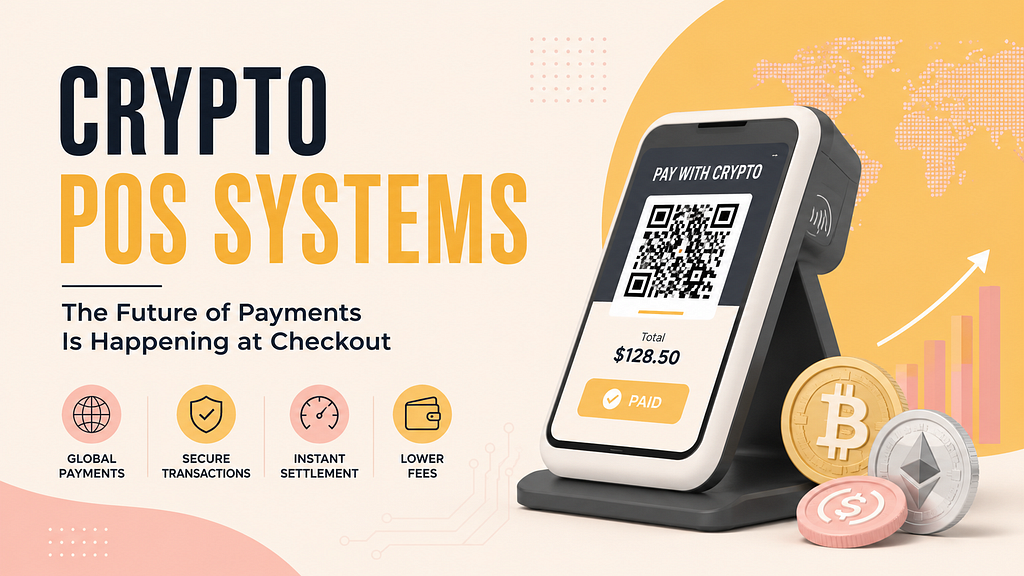
Crypto POS systems are not just a technological upgrade. They represent a structural shift in payment infrastructure. From small retail stores to large global enterprises, businesses are experimenting with accepting digital currencies such as Bitcoin, Ethereum, and stablecoins. What was once considered a niche experiment is now turning into a serious financial layer within commerce.
As global adoption accelerates, understanding crypto POS systems is essential for anyone in retail, fintech, or digital payments. This story explores how they work, why they matter, and what future they are shaping.
What Exactly Are Crypto POS Systems?
Crypto POS systems are point-of-sale solutions that allow merchants to accept cryptocurrency payments in real time. They function similarly to traditional POS machines but integrate blockchain-based payment rails instead of relying solely on banking networks.
At their core, these systems enable:
- Direct crypto payments from customers to merchants
- Instant conversion of crypto into fiat currency if required
- Secure blockchain validation for transactions
- Multi-currency support for global customers
A typical crypto POS setup includes a digital wallet, payment gateway integration, QR code scanner or NFC capability, and a backend system that handles conversion and settlement.
How Crypto POS Systems Work in Real Life
The process is designed to be simple for both merchants and customers, even though the underlying technology is complex.
- Customer selects crypto as payment method
- POS system generates a QR code with payment details
- Customer scans using a crypto wallet
- Transaction is broadcast to a blockchain network
- Payment is verified and confirmed
- Merchant receives crypto or converted fiat instantly
Why Merchants Are Adopting Crypto POS Systems
The rise of crypto POS systems is not accidental. It is driven by real economic and operational advantages.
Key reasons include:
- Lower transaction fees compared to card networks
- Faster settlement times, often within seconds or minutes
- Access to global customers without currency barriers
- Reduced chargeback risks
- Increased transparency in transaction records
For cross-border businesses, crypto POS systems eliminate traditional banking delays and foreign exchange complications. A customer in Europe can pay a merchant in Asia instantly without intermediaries.
The Role of Stablecoins in Crypto POS Growth
While cryptocurrencies like Bitcoin are widely known, stablecoins are becoming the backbone of crypto POS transactions. Stablecoins are digital assets pegged to fiat currencies like the US dollar.
Benefits include:
- Minimal price volatility risk
- Faster settlement across blockchain networks
- Easier accounting and reconciliation
- Improved merchant confidence
This has led to increased integration of stablecoins in retail, e-commerce, and hospitality sectors.
Challenges Facing Crypto POS Systems
Despite their promise, crypto POS systems are still evolving and face several challenges.
- Regulatory uncertainty in many countries
- Price volatility of non-stable crypto assets
- Limited merchant awareness and technical understanding
- Integration complexity with legacy POS infrastructure
- Security concerns around wallet management and private keys
Governments are also still developing frameworks for taxation, compliance, and anti-money laundering requirements for crypto transactions. This creates hesitation among mainstream businesses.
The Technology Behind Crypto POS Infrastructure
Crypto POS systems rely on a combination of blockchain technology, payment gateways, and fintech APIs.
Core components include:
- Blockchain networks for transaction validation
- Smart contracts for automated settlement
- Payment gateway APIs for merchant integration
- Wallet infrastructure for storing and transferring assets
- Cloud-based dashboards for transaction monitoring
Advanced systems also incorporate fraud detection algorithms, real-time analytics, and multi-chain compatibility.
Industries Leading Crypto POS Adoption
Several industries are at the forefront of adopting crypto POS systems.
Retail and E-commerce
- Online stores accepting crypto payments globally
- Physical retail outlets in tech-forward cities
Travel and Hospitality
- Airlines and hotels offering crypto booking options
- Cross-border tourist payments without conversion delays
Gaming and Digital Services
- In-game purchases using crypto wallets
- Subscription services powered by blockchain payments
Luxury Goods Market
- High-value transactions with enhanced security and privacy
The Customer Experience Shift
From a customer perspective, crypto POS systems simplify cross-border payments and enhance flexibility.
Benefits include:
- No need for traditional bank accounts
- Faster checkout experience
- Ability to use digital assets directly
- Enhanced privacy in transactions
- Reduced dependency on credit cards
This shift is particularly important for younger, digitally native users who already hold crypto assets.
Future of Crypto POS Systems
The future of crypto POS systems is closely tied to broader financial digitization trends. As blockchain networks scale and regulatory clarity improves, adoption is expected to grow significantly.
Future developments may include:
- Integration with central bank digital currencies
- AI-powered payment optimization
- Universal crypto payment acceptance across merchants
- Seamless interoperability between wallets and POS devices
- Fully decentralized payment ecosystems
In the long term, crypto POS systems may become as common as card readers are today.
Real-World Scenario: A Day in a Crypto-Enabled Store
Imagine a retail store in a global tourist city that accepts both traditional payments and crypto through a modern POS system.
A customer walks in, selects a product, and chooses to pay using a stablecoin from their digital wallet. The POS system instantly generates a QR code which the customer scans.
Within seconds, the blockchain confirms the transaction and the merchant receives payment either in crypto or instantly converted fiat currency. There is no waiting for bank settlement cycles, no manual reconciliation delays, and no cross-border friction.
For the customer, it feels like a normal card payment experience. For the merchant, it means faster turnover, reduced fees, and global accessibility. For the ecosystem, it represents a shift toward decentralized commerce.
Security and Compliance Deep Dive
Security is one of the most critical aspects of crypto POS systems.
Because blockchain transactions are irreversible, protecting wallet keys and private credentials becomes essential. Modern systems implement:
- Encryption and biometric authentication
- Hardware wallet integration
- Fraud detection algorithms
- Real-time monitoring systems
- Secure cloud infrastructure
However, risks still exist such as phishing attacks, malware, and compromised merchant devices.
Regulatory frameworks also play a major role. Standards such as PCI DSS and emerging crypto compliance regulations guide system design and ensure transaction safety.
Regulatory Landscape and Adoption Roadmap
The regulatory landscape for crypto POS systems is still evolving across different jurisdictions.
Some countries have embraced crypto payments with clear guidelines while others remain cautious due to concerns about financial stability and consumer protection. This uneven environment creates both opportunities and challenges for global merchants.
Businesses must navigate taxation, anti money laundering, and reporting obligations carefully. Despite complexity, innovation continues to accelerate as regulators and industry players collaborate.
The adoption roadmap typically follows:
- Early adoption in tech-savvy merchants
- Integration with stablecoins and fiat conversion layers
- Expansion into mainstream retail and services
- Regulatory alignment and standardization
- Full-scale global interoperability
In the long run, crypto POS systems are expected to become part of a hybrid financial infrastructure where traditional and decentralized systems coexist seamlessly, enabling faster, cheaper, and more inclusive global commerce.
Closing Reflection
What makes crypto POS systems particularly interesting is not just the technology itself but the behavioral shift they represent. People are no longer limited by geographic boundaries or traditional banking infrastructure when making everyday purchases.
This shift encourages a more fluid global economy where value moves as easily as information. However, mass adoption will depend on trust, education, and regulatory clarity. Without these foundations, even the most advanced systems may struggle to reach their full potential.
Still the direction of innovation is undeniable. Crypto POS systems are quietly reshaping how commerce functions at its most fundamental level.
As adoption accelerates across emerging and developed markets, crypto POS systems may also become a catalyst for rethinking financial inclusion policy innovation and digital infrastructure development. The impact will extend beyond payments influencing how economies operate in an increasingly digital world over time.
Crypto POS Systems: The Silent Revolution at Checkout Counters was originally published in Coinmonks on Medium, where people are continuing the conversation by highlighting and responding to this story.