Bitcoin Payment Privacy Explained: How to Spend BTC Without Linking Your Wallet Activity
--
Bitcoin payment privacy has become a central issue as more online merchants accept cryptocurrency. While Bitcoin enables direct peer-to-peer payments, its transparent ledger introduces a challenge that many users overlook: transaction traceability.
Every Bitcoin transaction is recorded publicly. Over time, repeated payments from the same wallet can reveal patterns, linking purchases and potentially exposing user behavior. For individuals who value discretion, this creates a need for additional privacy measures.
BMIX addresses this challenge through a model based on exchange-sourced coin replacement. By separating incoming and outgoing transactions, it helps reduce the risk of linking payments across merchants.
The Transparency Problem in Bitcoin Payments
Bitcoin operates on a public blockchain. While wallet addresses do not directly reveal identities, they can still be analyzed. Advanced tools can identify:
- Repeated transactions from the same address
- Connections between multiple wallets
- Behavioral patterns based on transaction timing and amounts
For users who frequently pay merchants, this can result in a visible transaction history that extends beyond a single purchase.
Why Privacy Still Matters for Everyday Transactions
Bitcoin is often used for online purchases, subscriptions, and services. In these cases, users may interact with multiple merchants over time. Without privacy measures, these interactions can be linked together.
This raises practical concerns:
- Can different purchases be connected?
- Can spending habits be analyzed?
- Can wallet activity be grouped into a single profile?
These questions highlight the importance of maintaining separation between transactions.
BMIX Approach: Clean Coin Replacement
BMIX introduces a different approach compared to traditional mixers. Instead of pooling and redistributing coins, it replaces incoming BTC with clean coins sourced from independent investors on major exchanges.
This ensures that:
- Output coins are not linked to the input transaction
- Coins have no previous mixer association
- Transactions remain independent from each other
The result is a cleaner transaction history for outgoing payments.
Example Scenario
A user purchasing products from multiple online stores may use the same wallet for convenience. Over time, this creates a pattern that can be traced.
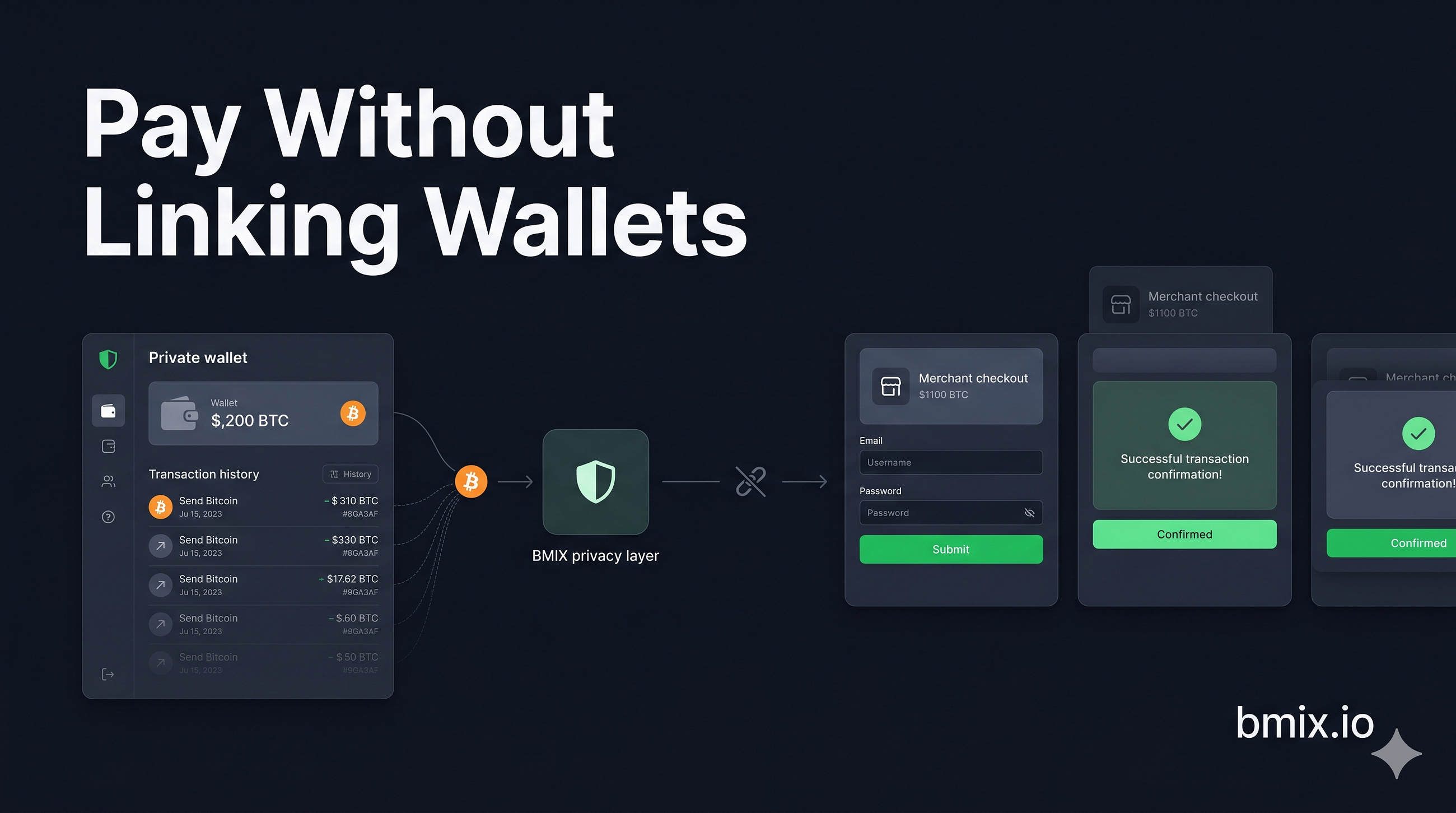
Using BMIX, the process changes:
- BTC is sent to BMIX
- Clean coins are received
- Payments to merchants are made using the new coins
This reduces the ability to link purchases across different platforms.
Supporting Privacy Features
BMIX integrates several features to strengthen transaction privacy:
- No registration or identity verification
- No logs or stored transaction data
- Data deletion after completion
- Optional multiple output addresses
- Randomized transaction timing
These features contribute to resistance against analysis methods such as clustering and equal-amount tracking.
Encouraging Thought
Should Bitcoin be treated as a fully transparent payment system, or should users actively manage their privacy when transacting online?
Conclusion
Bitcoin payment privacy is not automatically guaranteed by the network itself. Users who interact with multiple merchants need to consider how their transactions are recorded and analyzed.
BMIX provides a structured approach to reducing traceability by replacing incoming BTC with clean, exchange-sourced coins.
CTA: Pay merchants without exposing your wallet history
https://bmix.io