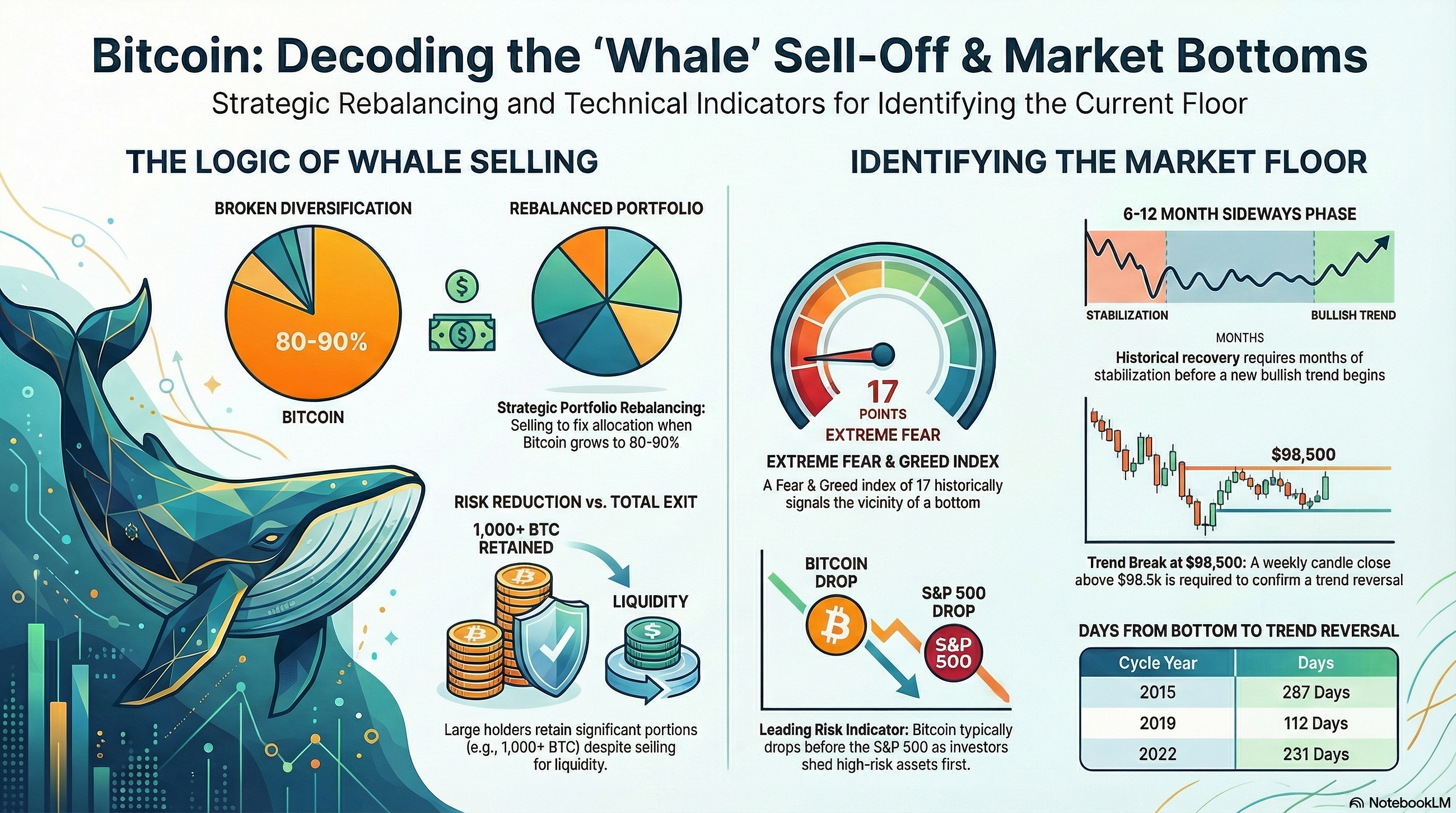
Bitcoin is now front-running the Fed rather than reacting to it. ETFs are the cause
Bitcoin's correlation with global central bank easing has turned strongly negative since 2024, suggesting BTC now leads rather than lags monetary policy signals.
By Francisco Rodrigues, AI Boost|Edited by Aoyon Ashraf Apr 5, 2026, 4:00 p.m. Make preferred on
What to know:
- Bitcoin may no longer move in step with Federal Reserve policy, as spot bitcoin ETFs have shifted price dynamics to institutional forward-looking positioning.
- Bitcoin's correlation with global central bank easing has turned strongly negative since 2024, suggesting BTC now leads rather than lags monetary policy signals.
- Crypto-native drivers like policy progress and institutional flows may matter more than the direction of monetary easing, allowing bitcoin to price in central bank pivots earlier than traditional markets.
Bitcoin may no longer move in step with Federal Reserve policy, according to a new report from Binance Research, which points to a structural shift driven by spot exchange-traded funds.
For years, crypto markets reacted sharply to interest rate signals, with bitcoin falling when central banks tightened monetary policy.
That pattern now appears to be breaking as Binance data shows bitcoin’s correlation with its Global Easing Breadth Index, which tracks 41 central banks, has turned strongly negative since 2024. Spot bitcoin ETFs were approved by the U.S. Securities and Exchange Commission (SEC) in January 2024.

Before ETFs, the relationship was mildly positive, with BTC tending to follow global easing cycles by several months. Now, the report finds the opposite effect is nearly three times stronger, suggesting the old link has reversed.
The change reflects a shift in who drives prices. Retail investors once dominated crypto trading and reacted to macro news. ETFs allowed institutions to play a bigger role, and these firms often positioned months ahead of policy changes, treating BTC as a forward-looking asset.
“As a result, BTC may have evolved from a macro 'lagging receiver' to a 'leading pricer,” Binance Research wrote. “A peak in easing may already be old news for BTC, and crypto-native drivers—such as policy progress and institutional flows—could matter more than the direction of monetary easing itself.”
The findings come as markets grapple with renewed stagflation fears tied to rising oil prices and growing geopolitical tensions over the war in the Middle East.
Rate expectations have swung from projected cuts to possible hikes, a backdrop that historically pressured risk assets.
Binance argues that the reaction may be overstated. In past cycles, central banks often pivoted to support growth despite inflation spikes. If history repeats itself, central banks are to eventually prioritize growth over inflation, and bitcoin will likely price that pivot earlier than expected.
Bitcoin NewsAI Disclaimer: Parts of this article were generated with the assistance from AI tools and reviewed by our editorial team to ensure accuracy and adherence to our standards. For more information, see CoinDesk's full AI Policy.Sizin için daha fazlası
Encryption Supremacy: Zcash and Privacy in the Age of Scale
Yazan CoinDesk Research31 Mar 2026 Tarafından sipariş edildiGenZcash
Most crypto privacy models weaken as blockchain data grows. Encryption-based models like Zcash strengthen. CoinDesk Research maps the five privacy approaches and examines the widening gap.
Neden önemli:
As blockchain adoption scales, the metadata available to machine learning models scales with it. Obfuscation-based privacy approaches are structurally degrading as a result. This report provides a comprehensive comparison of all five major crypto privacy architectures and a framework for evaluating which models remain durable as AI capabilities improve.
View Full ReportSizin için daha fazlası
Drift says $270 million exploit was a six-month North Korean intelligence operation
Yazan Shaurya Malwa4 saat önce
Attackers posed as a trading firm, met Drift contributors in person across multiple countries, deposited $1 million of their own capital, and waited half a year before executing the drain CoinDesk detailed earlier this week.
Bilinmesi gerekenler:
- A North Korean state-linked group spent roughly six months infiltrating Drift Protocol under the guise of a quantitative trading firm before executing a $270 million exploit on April 1.
- The attackers built trust by meeting Drift contributors at conferences, depositing more than $1 million, and integrating an Ecosystem Vault, then...

AI is making crypto's security problem even worse, Ledger CTO warns
3 saat önce
Drift says $270 million exploit was a six-month North Korean intelligence operation
4 saat önce
Ant Group’s blockchain arm unveils platform for AI agents to transact on crypto rails
5 saat önce
Bitcoin holds steady as sentiment hits worst levels since Iran war began
5 saat önce
Bitcoin's $1.3 trillion security race: Key initiatives aimed at quantum-proofing the world's largest blockchain
13 saat önce
Bitcoin tends to outperform gold and stocks after global shocks, Mercado Bitcoin finds
22 saat önceTop Stories
Traders are the big winners as 24/7 stocks will finally end the after-hours price 'manipulation'
4 Nis 2026
Ex-UK Chancellor backs bitcoin as alternative to failing systems
23 saat önce
Here's what 'cracking' bitcoin in 9 minutes by quantum computers actually means
4 Nis 2026
Solana's quantum-threat readiness reveals harsh tradeoff: security vs speed
4 Nis 2026
Schwab plans spot bitcoin, ether trading launch in first half of 2026
3 Nis 2026