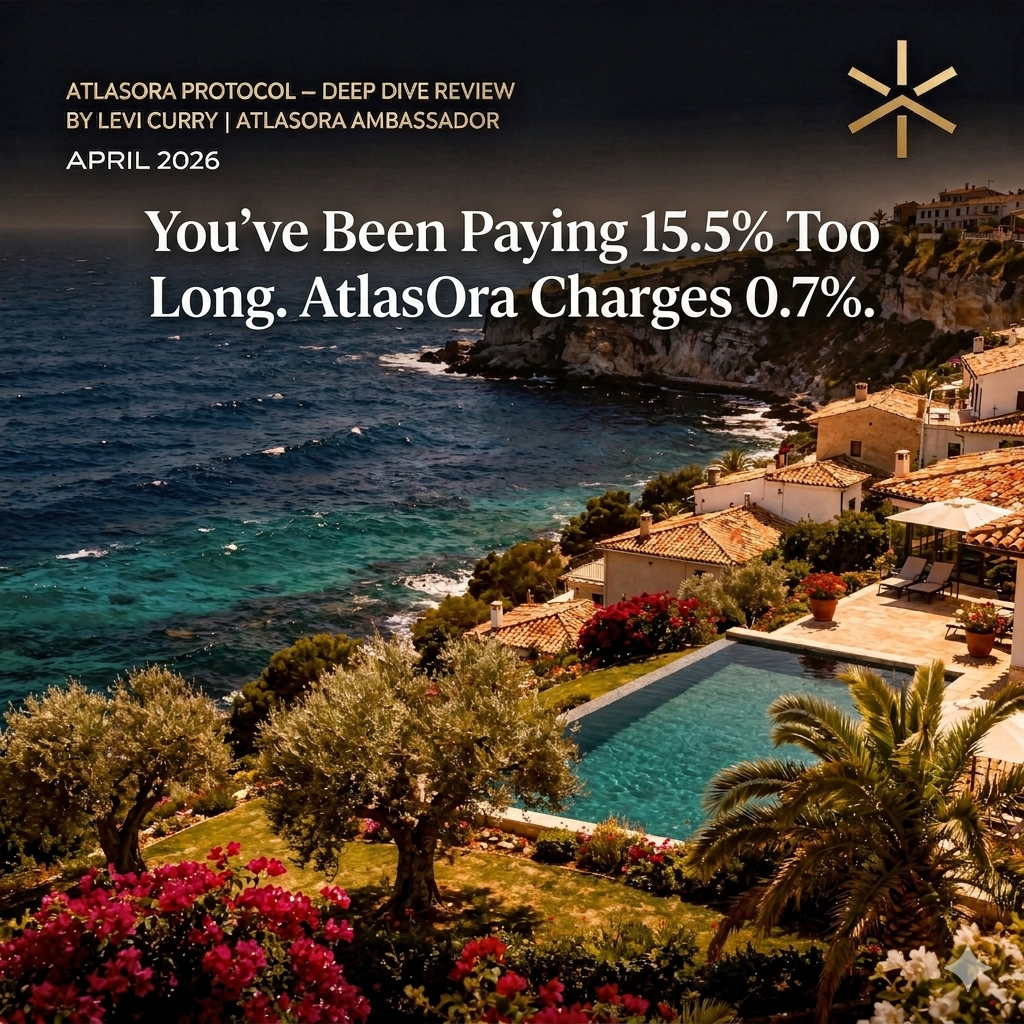
AtlasOra Protocol: The Vacation Rental Platform Every Airbnb Host and Crypto Investor Needs to Know About Right Now
 LEVI CURRY4 min read·Just now
--
The Problem Nobody Talks About Loudly Enough
The vacation rental industry generates over $300 billion annually. A significant portion of that money never reaches the people who actually do the work , the hosts who furnish properties, manage guests, handle complaints, and lose sleep over occupancy rates.
Instead it flows to platforms.
Traditional platforms take 15 to 20% from hosts on every booking (AtlasOra) , money extracted for providing a website while hosts provide everything else. This has been the reality for over a decade and most hosts have simply accepted it as the cost of doing business.
AtlasOra was built to change that permanently.
What AtlasOra Actually Is
AtlasOra is a decentralized short-term rental marketplace focused on vacation homes, apartments, and unique properties, launched with an initial focus on Spain in March 2026 and rapidly expanding across Europe. (KuCoin)
But here’s what makes it genuinely different from every other platform claiming to disrupt the vacation rental industry , the technology is invisible to the end user.
The platform allows users to book stays using familiar fiat interfaces while handling escrow, settlement, and yield generation entirely on-chain. This hybrid approach makes AtlasOra accessible to mainstream users who have never interacted with crypto wallets, while still delivering meaningful Web3 advantages to hosts and the broader ecosystem. (Bitrue)
You pay euros. You receive euros. The blockchain is just the backend.
The Numbers That Matter For Hosts
AtlasOra is designed to pay hosts faster, protect guests better, and cut platform fees , stopping hosts from losing 15 to 20% to platforms so they keep almost everything they earn, with instant access to cashflow the moment a guest books. (AtlasOra)
In concrete terms for a host earning €5,000 per month:
On Airbnb you pay €775 per month in fees.
On AtlasOra you pay €35 per month in fees.
Annual saving: €8,880 , back in your pocket every year.
And the first hosts to list are paying 0% fees for six months. Zero.
Why the Architecture Is Genuinely Different
Most platforms hold your money after a booking until after checkout. AtlasOra does something structurally different.
AtlasOra locks booking payments into a smart contract , the platform does not hold the money. If cancellation rules are met, refunds are processed automatically. Instead of waiting until the stay ends, hosts receive their payout at check-in. (Bitrue)
The system transforms frozen booking balances into something actually useful , guests get automatic rebates, hosts get optional early access to a portion of their payout, and the ecosystem shares in the value created by faster settlement. All powered by non-custodial rails, fully automated, fully transparent. (LinkedIn)
And here’s the part that really matters: Airbnb and Booking.com cannot copy this model , not because they don’t want to but because their legacy policies and refund structures make it structurally impossible. (LinkedIn)
Why Hosts Should Get In Early
AtlasOra is not asking hosts to leave Airbnb or Booking.com. It’s asking them to add a third channel that charges a fraction of what existing platforms take.
No exclusivity required. No technical knowledge needed. Setup takes two minutes.
AtlasOra launched host onboarding in Spain in March 2026 and is actively expanding across Europe, with future phases including broader geographic coverage, additional property types, and deeper integration of the AO Protocol. (KuCoin)
The hosts listing now are getting maximum algorithm visibility before competition builds. The same opportunity existed on Airbnb in 2009. The hosts who moved early built a decade-long advantage. This is that moment for AtlasOra.
Why Investors Should Pay Attention
The global short-term rental market exceeds $300 billion annually. Traditional platforms capture substantial fees while hosts and guests bear the cost of inefficiencies. AtlasOra’s model directly attacks this by returning value to participants through lower fees and faster settlements. Even capturing a small percentage of this market could drive significant growth for the platform and AORA token. (KuCoin)
The $AORA token has real utility tied to real revenue:
🗳️ Governance voting rights over platform decisions
🔥 50% of platform profits used for buyback and burn
🏷️ Guest discounts on bookings
⚖️ Conflict resolution participation
📈 DeFi yield generated on booking escrow through Aave
The ICO priced AORA at $0.125 with a $25 million FDV. Post-TGE and exchange listings, price discovery will depend heavily on platform metrics such as booking volume, host onboarding, and user retention. (KuCoin)
With the ICO successfully completed and the TGE scheduled for early Q2 2026, AtlasOra is entering a critical phase of token liquidity and ecosystem building. (KuCoin)
The Expansion Roadmap
Spain goes live first. Europe next. Then the USA. (LinkedIn)
For investors tracking the catalyst timeline, watch for the early Q2 2026 TGE, initial liquidity events on Base DEXs, and subsequent major exchange listings. Early platform metrics from the Spain launch will be the key leading indicators of what comes next.
The Bottom Line
AtlasOra is solving a real problem in a $300 billion industry with technology that works invisibly for mainstream users. The fee saving for hosts is mathematically undeniable. The token utility is tied to real booking revenue not speculation. And the entry point , both for hosts listing early and investors getting in before major exchange listings , is still open.
The fee-less era of vacation rentals has begun. The question is whether you’re positioned for it before or after it becomes obvious.
👉 List your property free: atlasora.com
👉 Learn more: atlasora.foundation
I’m Levi Curry, AtlasOra community ambassador. This is not financial advice. Always do your own research before making any investment decisions.