2026 Hong Kong Web3 Festival: As the Hype Fades, Searching for the Underlying Logic of the Primary Market
 Synbo5 min read·Just now
--
For the Web3 industry, the Hong Kong Web3 Festival has never been just a high-density annual offline gathering; it is more of an incredibly precise barometer for industry trends.
In April 2026, as the spring breeze of Victoria Harbour once again welcomed Web3 builders from around the globe, anyone present at the opening ceremony could keenly sense a strong signal: the noise driven purely by “grand narratives” and “short-term market sentiment” is fading. The industry is being pulled back onto a hardcore, fundamental track.
Regulation, Finance, and Underlying Protocols Take Center Stage
If you closely examine the agenda of this year’s opening ceremony, you will notice a fascinating strategic arrangement: regulation, the financial system, underlying protocols, and AI were concentrated in the most prime morning slots. This prioritization itself speaks volumes about the shift in the industry’s focus.
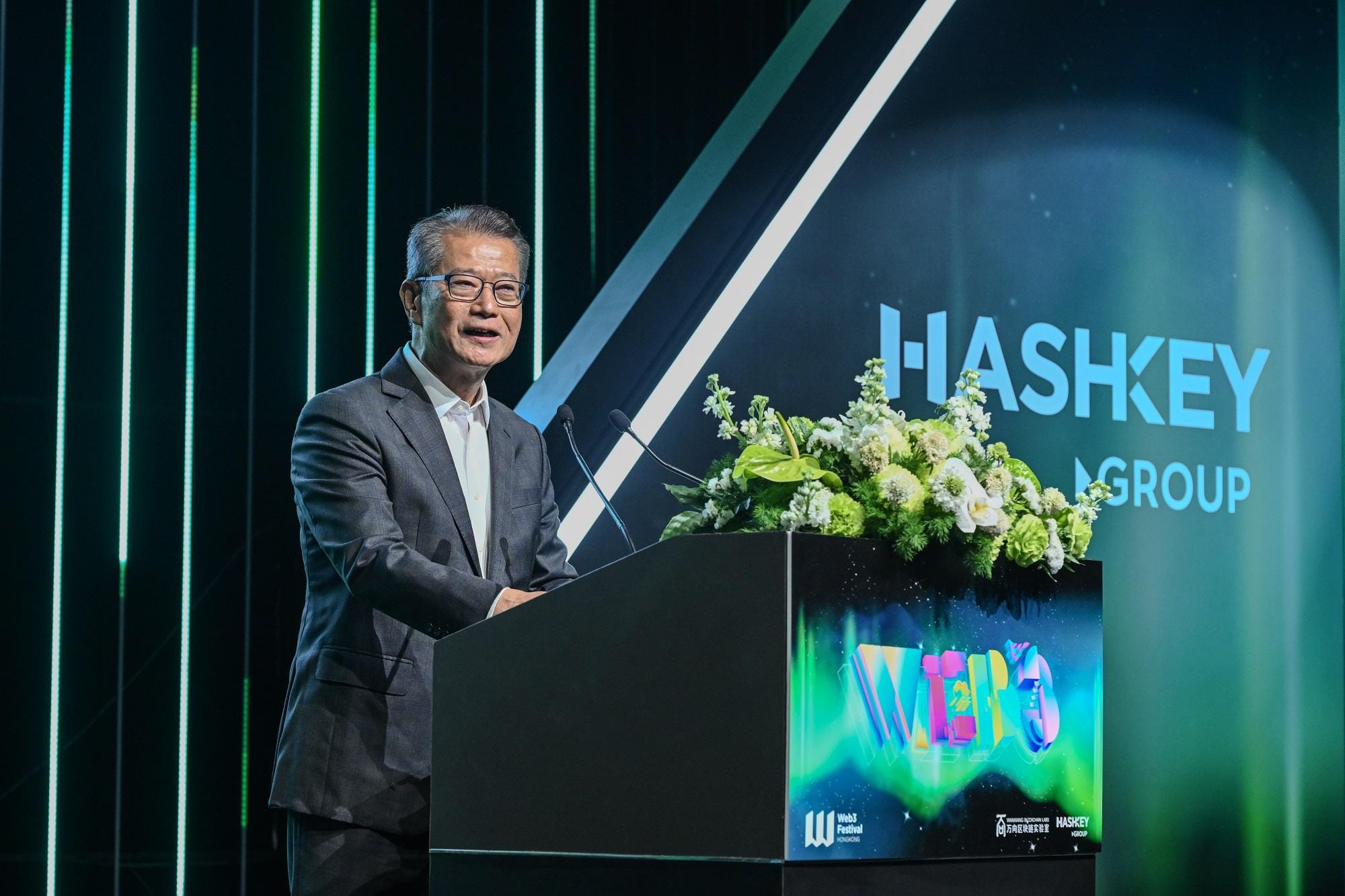
At 9:00 AM, the opening of the conference left no room for hyped-up sector speculation. Instead, it dove straight into the synergistic context of “Policy–Finance–Industry.” Paul Chan Mo-po, Financial Secretary of the Hong Kong SAR, delivered the opening keynote. Following him, the Under Secretary for the Financial Services and the Treasury Bureau, representatives from the Securities and Futures Commission (SFC), and Legislative Council Member Duncan Chiu took the stage in succession to speak intensively on Hong Kong’s digital asset pathways and regulatory practices.
What this means: In the context of Hong Kong, Web3 has completely bid farewell to its “geek experimental playground” phase and is being historically integrated into mainstream economic and financial frameworks.
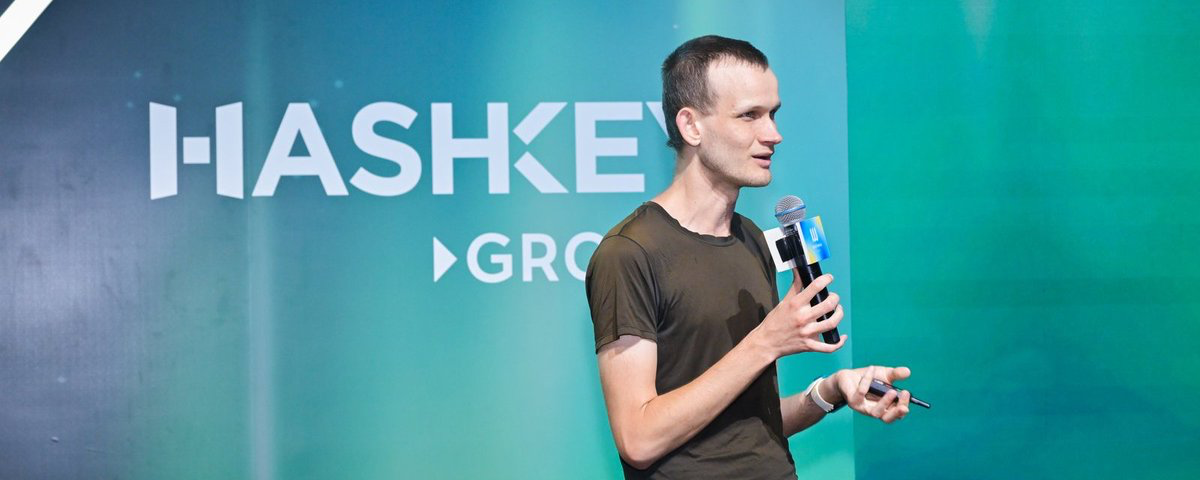
As the agenda progressed, the discussions became increasingly structural. Topics ranged from a keynote by University of Maryland Finance Professor Michael Faulkender to a heavyweight roundtable featuring multinational representatives discussing “Building a Sustainable Digital Finance Ecosystem in Asia.” At 11:45 AM, Ethereum founder Vitalik Buterin took the stage to deliver a keynote on “Where the Ethereum Protocol is going.”
Even more interestingly, right before Vitalik’s appearance, the conference deliberately scheduled a speech on “The Integration of AI and Web3 — The Rise of Decentralized Agentic Economy.” Here, AI was no longer just an external hype label, but a foundational tool being seriously explored for how it will transform on-chain information processing and collaboration efficiency.
The “Hidden Reconstruction” of the Primary Market Amidst the Compliance Wave
Looking through the mirror of the Hong Kong Web3 Festival, what are we really seeing? Combined with the actual movements at the event, the primary market sector is undergoing profound structural changes.
- The Rise of “Compliant Assets” and “Underlying Infrastructure” Why was the opening dominated by government officials and financial regulators? Because this is the absolute prerequisite for paving the way for RWAs (Real World Assets), compliant stablecoins, and global Web3 payment networks. When the industry attempts to bring US Treasuries, spot ETFs, and trillions in traditional capital on-chain, “regulatory balance” becomes the only passport.
- The Resource Barrier Paradox: However, this trend has introduced a brutal paradox into the Web3 primary market’s financing environment. As RWA and compliant payment tracks heat up, the primary market is rapidly skewing toward “resource-intensive” projects. Building such projects requires traditional licenses, deep financial networks, and massive fiat reserves. Consequently, top-tier VC capital is frantically concentrating into a handful of leading compliant projects. For grassroots developers and tech-driven Builders, the primary market hasn’t become more open; it has become a black box dominated by elite circles. Without resources and channels, high-quality grassroots innovators are rapidly losing even the opportunity to pitch a business plan.
- “Efficiency Tools” Reshaping Early Value Discovery Placing the fusion of AI and Web3 in a core time slot touched upon another pain point in the primary market: participation efficiency. In the past, a minority of institutions relied on “information gaps” to make investment decisions. Now, with AI being introduced into the “Agentic Economy,” the barrier to processing information is drastically lowering. What the market truly needs is no longer the closed-door judgments of a few, but a way to empower more people with the ability to evaluate, allowing communities to filter and organize early-stage information far more efficiently.
The Core Proposition: As the industry shifts from “chasing hype” to “building underlying mechanisms,” the core question facing the primary market is: In a wave of compliance and elitism, how exactly should the early-stage market of the future be organized?
SYNBO: Reconstructing the Organizational Model of the Early-Stage Market
This is perhaps the true significance of SYNBO’s appearance at the Hong Kong Web3 Festival 2026.
At a crossroads where the industry is re-examining its foundational structures, SYNBO’s focus goes beyond the buzz of the exhibition floor. It addresses the grander proposition behind the conference agenda: If capital is concentrating into a few institutions, where should the innovations of everyday developers and communities go to find consensus?
As an infrastructure builder exploring the on-chain primary market, SYNBO’s emergence is a fundamental response to the precise pain points of the current financing environment:
- Solving the Financing Black Box: DeVC and the On-Chain Primary Market Exchange SYNBO aims to do more than just accelerate capital flow to projects; it aims to reconstruct the connection between projects, Builders, communities, and capital. Here, fundraising is no longer a closed internal process, but an open, verifiable consensus-trading process on-chain. High-quality developers can break free from the constraints of traditional capital circles and directly face the community through open mechanisms, earning early support and liquidity through verifiable data and technical prowess.
- Breaking Participation Barriers: Empowering “Community Capital” with “AI Efficiency” Echoing the AI Agentic Economy discussed at the conference, SYNBO is dedicated to transforming AI into the information infrastructure of the on-chain primary market, helping everyday users shatter the barriers of professional comprehension. Under SYNBO’s mechanism, early-stage investing is no longer the privilege of a few institutions. Every community member has a more egalitarian opportunity to participate and, through decentralized collaboration, truly become the “Community Capital” that influences a project’s development.
Looking Forward
The 2026 Hong Kong Web3 Festival showed us a Web3 world that is growing more mature, grounded, and deeply integrated with traditional finance. Yet, behind the smooth operation of this massive machine, someone must still preserve the soil for native innovation.
“How do we organize a better early-stage market?” The conference posed the question, and SYNBO is providing a realistic answer through transparent on-chain mechanisms, community capital collaboration, and highly efficient participation models.
On this path to reconstructing on-chain financing, SYNBO’s goal is incredibly pure: Let capital become a form of collaboration, and let every dream have the chance to shine.